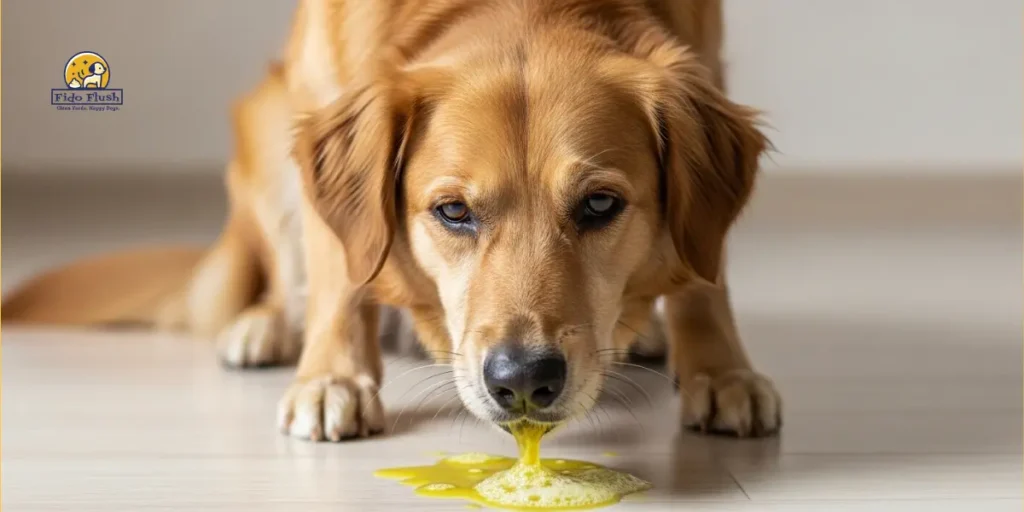
You walk into the kitchen in the morning, and there it is , a puddle of yellow foam or liquid on the floor, and your dog looking up at you like nothing happened. If this has ever been your morning, you know the mix of concern and confusion that comes with it.
Yellow vomit in dogs is one of the most common reasons pet owners in the US reach out to their veterinarian, and understandably so. The color alone is alarming. But before you panic, it helps to understand what that yellow substance actually is, why it comes up, and when it is something you need to act on right away versus something that will resolve on its own with some basic care at home.
This guide walks you through everything you need to know about dog spewing yellow bile, the most common causes, what to do when it happens, how to help your dog recover, and the specific situations where a vet call cannot wait.
Why Is My Dog Throwing Up Yellow?
The yellow substance your dog is bringing up is most commonly bile , a digestive fluid produced by the liver and stored in the gallbladder. Bile plays an important role in breaking down fats and aiding digestion in the small intestine. When a dog’s stomach is empty for too long, bile can flow backward from the small intestine into the stomach, where it irritates the stomach lining and triggers vomiting.
This is why yellow vomiting tends to happen in the early morning or late at night , periods when the stomach is most likely to be empty. The vomit is often foamy, yellow or yellow-green in color, and typically does not contain food.
That said, bile is not the only reason a dog throws up yellow. Here are the most common causes:
Bilious Vomiting Syndrome
Bilious Vomiting Syndrome (BVS) is the most frequent explanation for a dog throwing up yellow foam or liquid, especially first thing in the morning. It occurs when bile accumulates in an empty stomach overnight, causing irritation that results in vomiting.
Dogs with BVS are otherwise healthy and the vomiting is typically a one-time event each episode. If your dog throws up yellow in the morning but then eats normally, stays active, and seems completely fine for the rest of the day, BVS is the most likely culprit.
It is more common in dogs that eat once a day or go long stretches between meals. Simply adjusting the feeding schedule , adding a small snack before bed to keep something in the stomach overnight , often resolves it entirely.
An Empty Stomach
Related to but distinct from BVS, a dog that has simply gone too long without eating can vomit yellow bile even without a chronic pattern. This happens because the stomach continues producing acid even when empty. When there is no food to work on, the combination of stomach acid and bile can irritate the stomach lining enough to trigger vomiting.
If your dog skipped a meal, had a disrupted routine, or went unusually long between feedings and then threw up yellow, an empty stomach is likely the simple explanation.
Dietary Indiscretion
Dogs are not picky about what they put in their mouths. Eating something they should not , garbage, a dead animal, grass, a foreign object, rich table scraps, or anything else outside their normal diet , can cause stomach upset that results in yellow vomiting.
Dogs that get into the trash are particularly prone to this. Spoiled food, packaging materials, and the sheer volume of what they consume can lead to significant gastrointestinal distress. If your dog is a chronic trash raider on top of vomiting episodes, stopping your dog from getting into the trash is worth addressing as a first step.
Gastritis
Gastritis refers to inflammation of the stomach lining. It can be acute (sudden, short-term) or chronic (ongoing). Common triggers include eating something irritating, bacterial or viral infections, certain medications like NSAIDs, and in some cases, stress.
A dog with gastritis may vomit yellow bile , particularly when the stomach is empty , along with other signs like decreased appetite, lethargy, or abdominal discomfort. Acute gastritis often resolves within a day or two with supportive care. Chronic gastritis requires veterinary investigation and treatment.
Intestinal Obstruction
A more serious cause of yellow vomiting is an intestinal blockage. When a dog swallows a foreign object , a piece of toy, a sock, a bone fragment, or anything else that cannot pass through the digestive tract , it can cause a partial or complete obstruction.
As the stomach tries and fails to push contents through the blocked intestine, bile-tinged vomiting can result. Other signs of an obstruction include repeated vomiting that does not stop, loss of appetite, abdominal bloating or pain, lethargy, and the absence of normal bowel movements. If you suspect an obstruction, this is an emergency , do not wait to call your vet.
Pancreatitis
The pancreas plays a key role in digestion by producing enzymes that break down food. When the pancreas becomes inflamed , a condition called pancreatitis , the digestive process is disrupted and vomiting, including yellow bile vomiting, is a primary symptom.
Pancreatitis is often triggered by a high-fat meal or dietary indiscretion. It ranges from mild to severe and can be life-threatening in acute cases. Other signs include abdominal pain (dogs may adopt a “prayer position” , front end down, rear end up), loss of appetite, diarrhea, and lethargy. Pancreatitis always requires veterinary attention.
Acid Reflux
Just like in humans, dogs can experience acid reflux , the backward flow of stomach acid and digestive fluids into the esophagus. This can cause yellow or yellowish-white vomiting, particularly after eating or first thing in the morning.
Chronic acid reflux in dogs can lead to esophagitis (inflammation of the esophagus), which causes additional discomfort. Diet adjustments, feeding smaller more frequent meals, and in some cases medication can help manage it.
What To Do If Your Dog Is Throwing Up Yellow
When you find yellow vomit, resist the urge to either ignore it entirely or immediately assume the worst. Here is a clear, practical sequence of steps:
Step 1: Stay calm and observe. Take a moment to assess the situation. How many times has your dog vomited? Are they acting normally , alert, interested in their surroundings, willing to move around? Or do they seem lethargic, uncomfortable, or distressed? Your observations in the first few minutes are valuable.
Step 2: Check for other symptoms. Look for signs beyond the vomiting itself. Is there blood in the vomit? Is your dog’s abdomen swollen or tender? Have they stopped eating or drinking? Are they having diarrhea alongside the vomiting? Are they straining or unable to have a normal bowel movement? The presence or absence of these accompanying symptoms will help guide your next steps.
Step 3: Withhold food temporarily. If your dog has vomited once and otherwise seems fine, give their stomach a short rest. Withhold food for 2 to 4 hours to allow the stomach lining to settle. Do not withhold water , keeping your dog hydrated is important, but offer it in small amounts rather than letting them drink a full bowl at once, as drinking too fast can trigger more vomiting.
Step 4: Reintroduce food slowly. After the rest period, offer a small amount of bland food , plain boiled chicken and white rice is a classic recommendation. If your dog tolerates it without vomiting, offer another small portion a few hours later. Gradually transition back to their normal food over the next day or two once they are keeping food down consistently.
Step 5: Monitor closely. Keep a close eye on your dog for the next 12 to 24 hours. Note how many times they vomit, whether it is getting better or worse, whether they are eating and drinking, and whether their energy level and demeanor seem normal. This information will be important if you need to call your vet.
Step 6: Call your vet if things are not improving. If your dog vomits more than twice in a short window, if the vomiting is getting more frequent rather than less, if they are showing any of the warning signs listed in the “When to Call the Veterinarian” section below, or if your gut tells you something is wrong , call your vet. You know your dog better than anyone.
How to Help Settle Your Dog’s Stomach After Vomiting
Once the acute vomiting has passed and your dog is keeping small amounts of food and water down, there are several things you can do to support their digestive recovery:
Feed smaller, more frequent meals. Instead of returning immediately to one or two large meals, break daily food intake into three or four smaller portions for a few days. Smaller meals are easier on a recovering stomach and reduce the risk of another vomiting episode triggered by an overfull or empty stomach.
Stick with bland food during recovery. Boiled chicken (no skin, no seasoning) with plain white rice or plain boiled sweet potato is gentle on the digestive system and easy to absorb. Continue this for 24 to 48 hours before slowly blending regular food back in.
Keep water available but manage intake. Hydration is critical after vomiting, but a dog that gulps a large amount of water too quickly can vomit again. Offer water in small amounts frequently rather than leaving a full bowl down immediately after vomiting.
Try a small amount of plain canned pumpkin. Plain canned pumpkin (not pie filling) contains soluble fiber that can help soothe the digestive tract. A tablespoon or two added to your dog’s bland meal is a commonly recommended home remedy for mild stomach upset.
Skip treats, table scraps, and anything fatty. Rich or fatty food is hard on a recovering stomach and can trigger a new episode, particularly if pancreatitis was involved. Keep the recovery diet simple and consistent.
Limit vigorous exercise temporarily. Strenuous activity right after vomiting can aggravate nausea and stomach upset. Keep activity calm for the first 12 to 24 hours of recovery , short, gentle walks rather than runs or intense play.
Consider a probiotic supplement. Probiotic supplements designed for dogs can help restore healthy gut bacteria after a vomiting episode, particularly if your dog was given antibiotics or experienced a digestive disruption. Ask your vet about appropriate options for your dog’s size and age.
Re-evaluate the feeding schedule long term. If your dog regularly vomits yellow bile in the morning and Bilious Vomiting Syndrome is suspected, the most effective adjustment is giving a small meal or snack before bed to keep something in the stomach overnight. Many dogs who vomit first thing in the morning stop entirely once a late-evening snack is added to their routine.
Keeping track of your dog’s overall digestive patterns over time , how often they poop, their appetite, energy levels, and any recurring vomiting , gives you a fuller picture of their gut health and helps your vet identify patterns quickly if something more serious develops.
When to Call the Veterinarian
Not every episode of yellow vomiting requires an emergency vet visit. But there are clear situations where waiting is not the right call.
Call your vet promptly if your dog:
Vomits yellow bile more than two or three times in a single day, or vomits repeatedly without improvement over 24 hours.
Has blood in the vomit. Bright red blood suggests acute bleeding; dark brown or “coffee grounds” appearance can indicate digested blood from the upper GI tract. Both warrant immediate veterinary attention.
Is also experiencing diarrhea alongside the vomiting. Combined vomiting and diarrhea increases the risk of rapid dehydration, especially in puppies and senior dogs.
Seems lethargic, weak, or significantly “off” in their behavior. A dog that has vomited once but is otherwise alert and acting normally is very different from a dog that vomited once and is now lying still and unresponsive to interaction.
Has a visibly swollen, bloated, or hard abdomen. Abdominal bloating alongside vomiting can indicate a life-threatening condition called Gastric Dilatation-Volvulus (GDV or “bloat”), which is a veterinary emergency requiring immediate treatment.
Will not eat or drink anything for more than 24 hours.
Is a puppy, a senior dog, or has known underlying health conditions. These dogs have less reserve and can deteriorate faster than healthy adult dogs. The threshold for calling the vet should be lower.
Shows signs of pain , whimpering, adopting an unusual posture, reluctance to be touched on the abdomen, or restlessness that will not settle.
You suspect they swallowed a foreign object. If your dog got into something they should not have and is now vomiting, obstruction is possible. Do not wait to see if it passes on its own.
Go to an emergency animal hospital immediately if:
Your dog is vomiting repeatedly and cannot keep water down at all, is visibly in severe pain, has a distended abdomen, is collapsing or unable to stand, or if the vomiting is accompanied by pale or white gums (a sign of shock or significant internal bleeding).
In Southern California, 24-hour emergency veterinary care is available throughout the Los Angeles area. Having the number of your nearest emergency vet saved in your phone before you need it is always a smart move.
Preventing Future Vomiting Episodes
While you cannot prevent every stomach upset, there is a lot you can do to reduce how often your dog vomits and protect their digestive health long term.
Feed on a consistent schedule. Irregular feeding times leave the stomach empty for unpredictable stretches, increasing the risk of bile buildup. Two meals a day at consistent times works well for most adult dogs. If your dog is prone to morning bile vomiting, add a small snack before bed.
Choose a high-quality, digestible diet. Food quality directly affects how well a dog’s digestive system functions. Diets high in fillers and hard-to-digest ingredients stress the gut and make vomiting episodes more likely. Invest in a food with real protein as the first ingredient and minimal artificial additives.
Transition food changes gradually. Switching food abruptly is one of the most reliable ways to trigger vomiting and diarrhea. Any diet change should happen over at least 7 to 10 days, gradually increasing the proportion of new food.
Keep garbage and hazardous items out of reach. Dietary indiscretion is one of the top causes of vomiting in dogs. Securing trash cans, keeping household chemicals stored safely, and preventing access to compost piles, yard waste, and anything that could be swallowed reduces the chance of a vomiting episode significantly.
Do not feed fatty table scraps. High-fat foods are a leading trigger for pancreatitis in dogs. Even a single rich meal (think Thanksgiving turkey skin or leftover burger grease) can set off an acute pancreatitis episode in a susceptible dog. Keep human food out of reach.
Keep up with parasite prevention. Intestinal parasites can disrupt digestion and contribute to nausea and vomiting. Year-round parasite prevention and regular fecal testing at annual vet visits keep this risk low.
Manage stress in the household. Stress and anxiety can disrupt a dog’s digestive system. Major changes like moves, new pets, or shifts in routine should be managed as smoothly as possible. For dogs with significant anxiety, speak to your vet about behavioral strategies or support.
Use a slow feeder bowl if your dog eats too fast. Dogs that inhale their food swallow a lot of air in the process, which contributes to nausea and vomiting. A slow feeder bowl is an inexpensive fix that can make a real difference.
Schedule regular wellness exams. Annual vet checkups allow your vet to catch underlying conditions before they escalate into bigger problems. For senior dogs, twice-yearly exams are worth the investment.
Conclusion
Yellow vomit in dogs is alarming to see, but in many cases it has a straightforward explanation , an empty stomach, a bout of dietary indiscretion, or Bilious Vomiting Syndrome that can often be resolved with a simple feeding schedule adjustment. Understanding what causes it, knowing how to respond calmly and systematically, and recognizing the warning signs that require immediate veterinary care puts you in a much stronger position as a dog owner.
Watch, assess, act. Give the stomach time to settle with bland food and manage hydration. And when the signs tell you something more serious is going on, do not hesitate to call your vet. Your instinct about your dog is usually right.
Frequently Asked Questions
Why is my dog throwing up yellow foam?
Yellow foam is typically bile mixed with a small amount of stomach fluid. It usually means the stomach is empty and bile has backed up from the small intestine into the stomach, causing irritation. This is most common in the early morning and is often associated with Bilious Vomiting Syndrome. A single episode in an otherwise healthy dog is generally not an emergency, but recurring episodes or vomiting accompanied by other symptoms warrants a vet call.
Is yellow vomit in dogs serious?
It depends on the context. A single episode of yellow vomiting in a dog that is otherwise acting normally is usually not serious. Multiple episodes, vomiting alongside diarrhea or lethargy, blood in the vomit, or vomiting in a puppy or senior dog are all reasons to contact your veterinarian promptly.
Why is my dog throwing up bile in the morning?
Morning yellow vomiting is a classic sign of Bilious Vomiting Syndrome. The stomach has been empty overnight, bile accumulates and irritates the stomach lining, and the result is bile vomiting before the first meal of the day. Adding a small snack before bed to keep the stomach from being completely empty overnight often resolves this pattern entirely.
What should I feed my dog after vomiting yellow?
After a short food rest (2 to 4 hours), offering small amounts of bland food , plain boiled chicken with white rice is the go-to recommendation. Avoid fat, seasoning, or anything rich. Feed small portions every few hours rather than one large meal, and gradually transition back to normal food once they are keeping food down consistently.
Can stress cause my dog to vomit yellow?
Yes. Stress and anxiety can disrupt a dog’s digestive system and trigger nausea and vomiting, including yellow bile vomiting. If your dog vomits yellow during or after a stressful event (travel, thunderstorms, vet visits, changes in the household), stress may be a contributing factor.
What does it mean if my dog vomits yellow and has diarrhea?
Vomiting and diarrhea together indicate a more significant gastrointestinal upset. It increases the risk of dehydration, especially in young or older dogs. Contact your vet if both symptoms are present, particularly if they do not improve within 12 to 24 hours or if your dog seems lethargic or is refusing water.
How do I clean up yellow dog vomit?
Start by removing any solid material with a paper towel, working from the outside of the stain inward to avoid spreading it. Apply an enzymatic cleaner to the affected area and let it sit for the recommended time on the product label , enzymatic cleaners break down the proteins in vomit and eliminate odor rather than just masking it. Blot (do not scrub) the area clean, then allow it to air dry. For carpets, a second application is often needed. If the mess is large, on delicate surfaces, or has set in, consulting a professional pet waste cleaning company is a practical option , they have the equipment and cleaning agents to handle it thoroughly without damaging your flooring or upholstery.
When should I take my dog to the emergency vet for yellow vomiting?
Go to an emergency vet immediately if your dog is vomiting repeatedly and cannot keep water down, has a bloated or hard abdomen, is showing signs of severe pain, is collapsing or has pale gums, or if you suspect they have swallowed a foreign object. These are potential emergency situations that should not wait for a regular vet appointment.
Can yellow vomiting be a sign of poisoning?
Yes. Vomiting , including yellow bile vomiting , can be a symptom of toxin ingestion. If your dog may have gotten into a cleaning product, medication, plant, or anything else potentially toxic and is now vomiting, contact the ASPCA Animal Poison Control Center or an emergency vet immediately. Do not induce vomiting unless specifically instructed by a veterinarian.