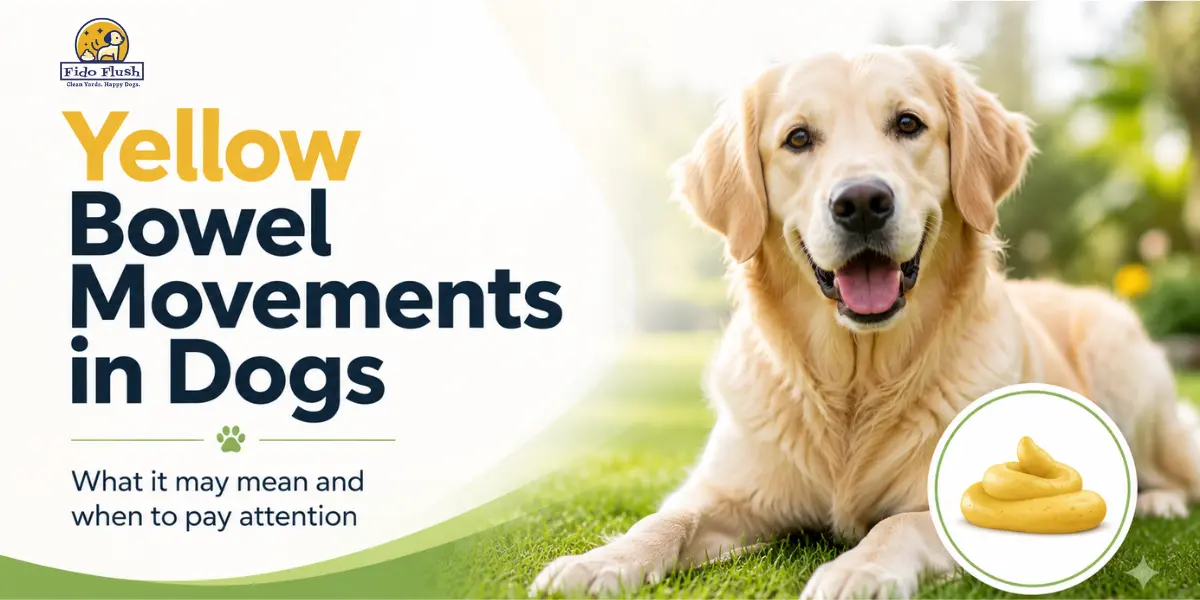
You pick up after your dog and notice the color is off. Instead of the usual chocolate brown, it is yellow, or bright yellow, or mustard-colored, or somewhere in between. It is hard to ignore, and for good reason. Stool color is one of the most reliable early signals of what is happening inside your dog’s digestive system.
Yellow bowel movements in dogs are more common than most owners realize, and they have a range of possible explanations, from something as minor as a dietary change to something that warrants a call to your vet. This guide walks through what yellow dog poop actually means, what causes it, what healthy and unhealthy stool looks like across the color spectrum, and how to respond when you see it.
What Do Yellow Bowel Movements in Dogs Mean?
Yellow stool in dogs means that something in the digestive process is off. In a healthy digestive cycle, bile produced by the liver starts out as a yellow-green liquid. As it travels through the intestines, gut bacteria convert it into the brown pigment that gives normal dog stool its characteristic color. When the stool comes out yellow, it means that conversion did not happen fully, or did not happen at all.
This can occur for several reasons. Food may have moved through the digestive tract too quickly for bile to be fully processed. The gut bacteria responsible for that conversion may be disrupted. The liver or gallbladder may not be producing or releasing bile properly. Or something in the diet, a medication, or an underlying condition may be interfering with normal digestion.
The shade of yellow matters too. A pale or mustard-yellow stool tells a somewhat different story than a bright or neon yellow one. Watery bright yellow diarrhea is more urgent than a single loose yellowish stool that resolves quickly. Context, consistency, and accompanying symptoms all factor into how seriously to take it.
Common Causes of Yellow Dog Poop
Bile Processing and Gut Bacteria Imbalance
This is the most fundamental cause of yellow stool. Healthy gut bacteria convert bile from yellow-green to brown during normal digestion. When the gut microbiome is disrupted, whether from antibiotics, stress, illness, or a sudden dietary shift, those bacteria are reduced or imbalanced, and bile does not get converted properly. The result is yellow or yellowish-brown stool.
This is also why dogs recovering from a course of antibiotics often temporarily produce yellow or off-colored stools. The antibiotics do their job against the target infection but also reduce beneficial gut bacteria in the process.
Dietary Changes and Food Sensitivity
Switching your dog’s food too quickly is one of the most common triggers for yellow or loose stools. When the digestive system does not have time to adjust to a new protein source or ingredient profile, food moves through faster than normal and bile does not get fully processed.
Food sensitivities and intolerances also produce yellow stool as a recurring symptom. A dog reacting to a specific protein, grain, or additive in their food may produce consistently yellow or soft stools until the offending ingredient is removed from the diet.
Eating Something Unusual
Dogs eat things they should not. Grass, foreign objects, spoiled food, and whatever else they find in the yard can irritate the intestinal lining and cause yellow diarrhea. The intestinal lining responds to irritation by moving contents through faster, which reduces the time bile has to convert to its normal brown color.
Dogs that routinely get into the trash or forage in the yard are at higher risk for this type of digestive upset. Managing what your dog has access to outdoors reduces how often this happens.
Intestinal Parasites
Giardia is one of the most common causes of yellow diarrhea in dogs, particularly in puppies or dogs that spend time in dog parks, shared outdoor spaces, or areas with standing water. Giardia disrupts the intestinal lining and causes rapid intestinal movement, yellow liquid or watery stool, and sometimes mucus in the stool.
Other intestinal parasites including roundworms, hookworms, and whipworms can also cause yellow or discolored stool, particularly when infestations are heavy. A fecal test at your vet is the fastest way to rule this in or out.
Liver or Gallbladder Issues
The liver produces bile and the gallbladder stores and releases it. If either organ is not functioning correctly, bile production or release may be reduced. When the intestines receive less bile than normal, stool does not achieve its typical brown color and comes out pale yellow, gray, or chalky.
Yellow stool associated with liver or gallbladder issues is often accompanied by other symptoms: lethargy, loss of appetite, vomiting, or a yellowing of the whites of the eyes and gums (jaundice). If you observe any of these alongside yellow stool, veterinary attention is needed promptly.
Stress and Anxiety
Stress is a frequently underestimated cause of digestive disruption in dogs. Significant changes in routine, travel, new environments, separation anxiety, or household changes can cause the digestive system to speed up, producing yellow or loose stools that resolve once the stressor is managed.
Stress-induced yellow stool typically appears around the time of the stressor and resolves within a day or two as the dog settles. If it persists beyond that window, it is worth investigating further.
Hemorrhagic Gastroenteritis
Hemorrhagic gastroenteritis (HGE), now more formally referred to as Acute Hemorrhagic Diarrhea Syndrome (AHDS), is a sudden and serious gastrointestinal condition that can cause yellow, bloody, or raspberry-jam-like diarrhea alongside rapid vomiting and dehydration. It is more common in small and toy breeds but can affect any dog. This is a veterinary emergency.
Medications and Supplements
Certain medications, particularly antibiotics and anti-inflammatory drugs, can disrupt normal gut bacteria and temporarily produce yellow or loose stools. Some dietary supplements, especially those high in certain vitamins or minerals, can affect stool color as well. If yellow stool began shortly after starting a new medication, mention it to your vet.
Exocrine Pancreatic Insufficiency (EPI)
EPI is a condition where the pancreas does not produce enough digestive enzymes. Without adequate enzymes, food is not broken down properly and passes through the digestive tract in a poorly digested state. Dogs with EPI often produce large, pale yellow, greasy, or foul-smelling stools. They typically lose weight despite eating normally. EPI requires veterinary diagnosis and ongoing enzyme supplementation.
Understanding Dog Stool Colors
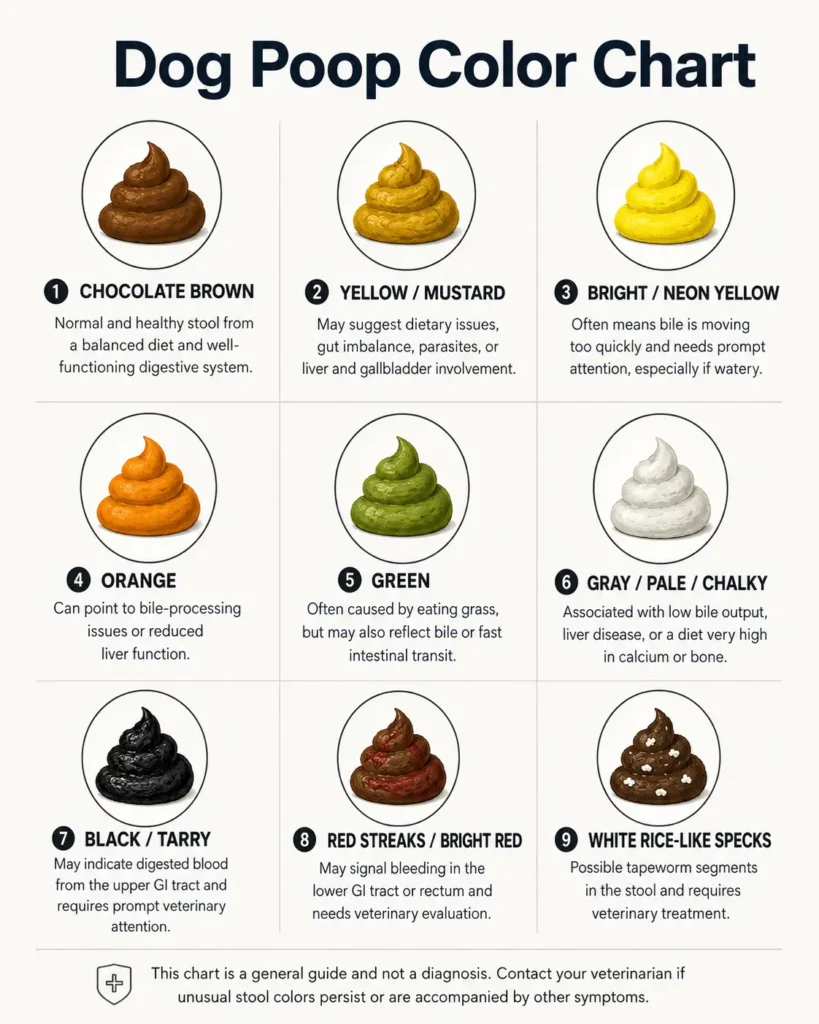
Stool color is one of the most informative quick health checks you can do as a dog owner. Here is a brief overview of what different colors generally indicate. An infographic color chart will follow this section for quick visual reference.
Chocolate brown: Normal. This is the target. Healthy stool from a dog with a balanced diet and functioning digestive system.
Yellow to mustard yellow: Can indicate dietary issues, gut bacteria imbalance, liver or gallbladder involvement, parasites, or food moving too quickly through the intestine.
Bright or neon yellow: Often points to bile being processed abnormally quickly. More urgent than a pale yellow, particularly if watery or accompanied by other symptoms.
Orange: Can indicate issues with bile processing or liver function. Similar concern level to yellow.
Green: Often caused by eating large amounts of grass. Can also indicate a bile or gallbladder issue, or a fast transit time through the intestine.
Gray or pale/chalky white: Associated with insufficient bile production, liver disease, or a diet very high in calcium or bone content.
Black or very dark tarry: Possible digested blood from the upper gastrointestinal tract. Requires prompt veterinary attention.
Red streaks or bright red: Possible bleeding in the lower GI tract or rectum. Needs veterinary evaluation.
White rice-like specks in any color stool: Possible tapeworm segments. Needs veterinary treatment.
Understanding what normal looks like for your dog makes it much easier to recognize when something has shifted. Knowing how often your dog should be pooping and what their typical stool looks like gives you a reliable baseline to compare against.
What to Do if Your Dog’s Poop Is Yellow
Most cases of yellow dog poop resolve on their own or with simple home management. Here is how to respond:
Do not panic after a single episode. One yellow stool in an otherwise healthy, active dog that is eating and drinking normally is not necessarily cause for alarm. Monitor closely for the next 12 to 24 hours and watch for additional symptoms.
Temporarily switch to a bland diet. Boiled chicken (no skin, no seasoning) and plain white rice is the standard recommendation. This gives the digestive system a break and reduces the load on an irritated gut. Feed small portions every few hours rather than one large meal.
Ensure your dog is drinking. Loose or watery yellow stools increase the risk of dehydration. Make sure fresh water is available and encourage drinking. Watch for signs of dehydration including dry gums, sunken eyes, or lethargy.
Check for recent changes. Think through anything that may have changed recently. New food, new treats, table scraps, access to something outdoors, a recent course of antibiotics, a stressful event. Identifying the trigger often points directly to the solution.
Review the yard. Dogs that have access to waste-heavy or poorly maintained outdoor spaces are more likely to eat things that cause digestive upset. A clean, well-maintained yard reduces the opportunities for your dog to ingest something that disrupts their gut.
Give it 24 to 48 hours on bland food. Most dietary-related yellow stool resolves within this window. If it does not, or if the stool is getting worse rather than better, contact your vet.
When to Seek Veterinarian Help
Some situations with yellow stool should not wait for home management to run its course. Contact your vet if:
Your dog has had yellow diarrhea for more than 24 to 48 hours without improvement. Persistent yellow diarrhea depletes fluids and nutrients faster than most owners realize.
The yellow stool is watery, bright yellow, and frequent. This pattern is more likely to lead to dehydration quickly, especially in puppies and senior dogs.
There is blood in the stool alongside the yellow color. Any combination of yellow stool with red streaks or a bloody appearance needs veterinary evaluation.
Your dog is lethargic, not eating, vomiting, or showing signs of abdominal discomfort alongside the yellow stool. This combination suggests the issue is systemic, not just a passing digestive upset.
You notice yellowing of the skin, eyes, or gums alongside yellow stool. This is a sign of jaundice, which indicates the liver is struggling. This requires same-day veterinary attention.
Your dog is a puppy. Puppies dehydrate much faster than adult dogs and are more vulnerable to parasites and viral infections that present with yellow diarrhea, including parvovirus.
Your dog has not responded to bland diet management after 48 hours. A vet can run a fecal test, check for parasites, assess organ function, and identify causes that home management will not resolve.
Yellow vomiting alongside yellow stool is another reason to act promptly. If your dog is throwing up yellow at the same time as producing yellow stool, the digestive disruption is likely more significant than a simple dietary issue.
The Role of Gut Health in Stool Color
Stool color is not just about what your dog ate. It is a direct reflection of what is happening in the gut microbiome, which is the community of bacteria, fungi, and other microorganisms that live in the digestive tract.
A healthy gut microbiome processes bile efficiently, absorbs nutrients effectively, and produces well-formed, consistently brown stool. When that microbial community is disrupted, whether through antibiotics, stress, poor diet, illness, or environmental factors, the processing breaks down and stool color shifts.
This is why two dogs eating the same food can produce noticeably different stool. The health of their individual gut microbiomes, shaped by genetics, history, and lifestyle, drives how efficiently each dog digests and processes what they eat.
Supporting gut health is therefore not just about managing symptoms when yellow stool appears. It is about maintaining the underlying conditions that keep the digestive system functioning properly day to day. A dog with a well-supported gut microbiome is more resilient to the occasional dietary disruption, stressor, or environmental challenge.
How to Keep Your Dog’s Digestive System Healthy
Most recurring digestive issues, including yellow stool, can be reduced significantly with a few consistent habits.
Feed a high-quality, consistent diet. The single most impactful thing you can do for your dog’s gut health is feed them a stable, high-quality diet with a named protein source and minimal fillers. Consistency reduces the microbiome disruption that causes off-color stools.
Transition food changes gradually. Any new food should be introduced over 7 to 10 days, slowly blending the new with the old. Abrupt switches are one of the most reliable triggers for yellow or loose stools.
Support gut bacteria after disruption. If your dog has recently been on antibiotics or recovered from a digestive illness, a vet-approved probiotic can help restore gut bacteria more quickly. Ask your vet for a recommendation appropriate for your dog’s size and situation.
Maintain year-round parasite prevention. Intestinal parasites disrupt the gut lining and cause chronic digestive issues including yellow stool. Year-round parasite prevention and annual fecal testing keep this risk low.
Minimize stress when possible. Dogs with anxiety-driven digestive issues benefit from stable routines, adequate exercise, and where needed, behavioral support or veterinary guidance.
Keep the outdoor environment clean. Dogs with access to waste-heavy yards are more likely to ingest something that disrupts their gut. Prompt, consistent waste removal keeps the outdoor space cleaner and reduces the risk of your dog picking up parasites or eating something problematic. For dog owners across the Los Angeles area, Fido Flush provides weekly professional waste removal that keeps yards consistently clean, taking one variable out of the digestive health equation entirely.
Monitor stool regularly. You cannot act on changes you do not notice. Getting into the habit of checking stool color, consistency, and frequency each day takes seconds but gives you early warning on anything that needs attention. Proper dog waste management is about more than cleanliness; it is also about knowing what is normal for your dog so you can catch problems early.
Conclusion
Yellow bowel movements in dogs are a signal worth paying attention to, not a reason to panic. In most cases, yellow stool traces back to something identifiable: a dietary change, a gut bacteria disruption, something the dog ate, or a passing stressor. With a short course of bland food, close monitoring, and attention to what may have changed recently, many cases resolve within a day or two.
What matters most is knowing what normal looks like for your dog, acting promptly when something changes, and recognizing the warning signs that require professional veterinary care rather than home management. When in doubt, a call to your vet is always the right move.
Frequently Asked Questions
What does yellow dog poop mean?
Yellow dog poop means bile in the stool has not been fully converted by gut bacteria, which normally give stool its brown color. It can result from food moving too quickly through the digestive tract, a gut bacteria imbalance, dietary changes, parasites, stress, or liver and gallbladder issues.
Why is my dog’s poop yellow?
The most common reasons are a recent dietary change, eating something unusual, intestinal parasites like Giardia, gut bacteria disruption from stress or antibiotics, or liver and bile processing issues. A single episode in an otherwise healthy dog is usually not serious, but persistent yellow stool warrants a vet visit.
What does bright yellow dog poop mean?
Bright or neon yellow stool typically indicates bile is passing through the intestine very rapidly without being processed normally. It is more concerning than a pale mustard-yellow stool and is more likely to accompany watery diarrhea. If it persists beyond 24 hours or your dog shows other symptoms, contact your vet.
Is yellow dog poop an emergency?
Not always. A single episode of yellow stool in a dog that is otherwise acting normally is not typically an emergency. However, persistent yellow watery diarrhea, yellow stool with blood, yellow stool alongside vomiting or lethargy, or yellow stool in a puppy or senior dog all warrant prompt veterinary attention.
Why does my dog have yellow diarrhea but is acting fine?
A dog can have yellow diarrhea and otherwise seem perfectly normal, particularly in early-stage dietary or stress-related cases. This does not mean the cause is definitely minor. Monitor closely, switch to bland food temporarily, and contact your vet if it does not improve within 24 to 48 hours.
What should I feed my dog after yellow diarrhea?
Boiled chicken (no skin, no seasoning) with plain white rice is the standard bland diet recommendation. Feed small, frequent portions rather than full meals. Continue for 24 to 48 hours and then gradually reintroduce their regular food once stools are returning to normal.
Can yellow dog poop after chicken and rice be normal?
A slightly pale or lighter stool is common when a dog is eating a bland chicken and rice diet because the fiber and ingredient profile is very different from their regular food. If the stool is otherwise soft-formed and improving over time, this is not a concern. If it is bright yellow, watery, or worsening, contact your vet.
Can stress cause yellow poop in dogs?
Yes. Stress accelerates digestive transit time, which means bile does not have enough time to be fully converted before stool passes. Stress-related yellow stool usually appears around the time of the stressor and resolves within one to two days as the dog settles.
What parasites cause yellow stool in dogs?
Giardia is the most commonly associated parasite with yellow diarrhea in dogs. Other intestinal parasites including roundworms, hookworms, and whipworms can also disrupt normal digestion and produce yellow or off-colored stools. A fecal test at your vet is the quickest way to identify or rule out parasites.
How do I clean up yellow dog poop from carpet or hard floors?
Remove as much solid material as possible first, then apply an enzymatic cleaner to break down the remaining residue. Blot, do not scrub, and allow the cleaner to sit for the recommended time before wiping clean. For carpet, a second application is often needed. For a thorough guide on dealing with dog waste indoors, the process of cleaning dog poop out of carpet is covered in detail in our separate post.