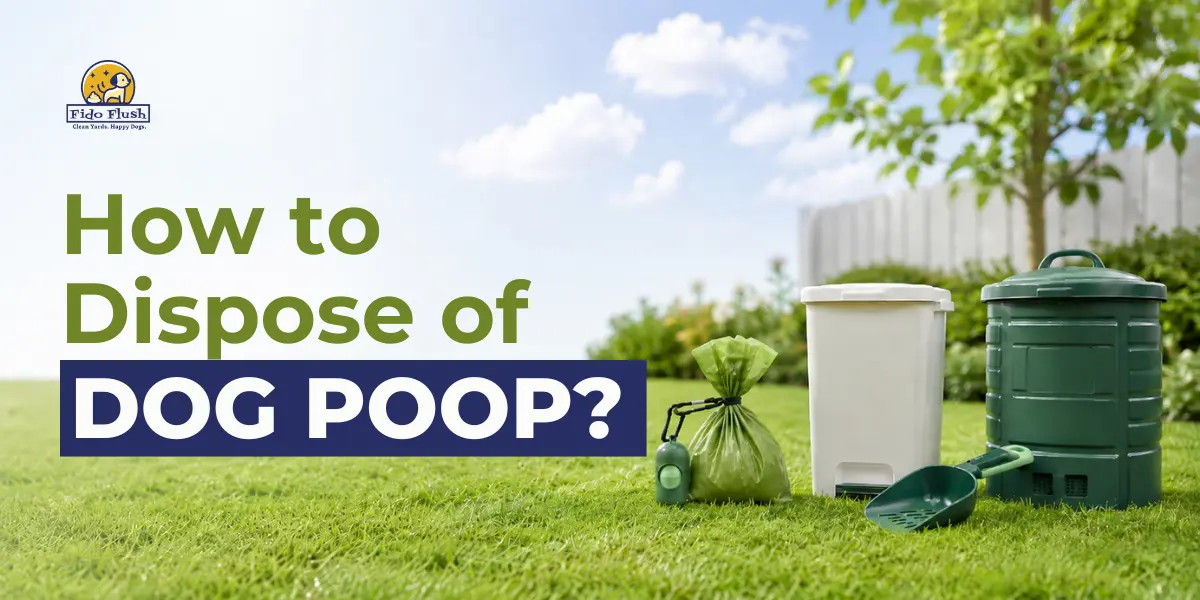
Picking up after your dog is the easy part. Knowing what to actually do with it afterward is where most dog owners either stop thinking or fall into habits that are not as responsible as they could be. Leaving it in a bag on the sidewalk, burying it in the yard, or tossing it somewhere out of sight might feel harmless, but dog waste handled incorrectly creates real problems for your lawn, your neighborhood, and the environment.
This guide covers every legitimate disposal method available to US dog owners, what each one involves, and which situations each method works best for.
Why Proper Dog Poop Disposal Matters
Dog waste is not just an inconvenience. The EPA classifies it as a non-point source pollutant, placing it in the same category as chemical runoff and oil spills. Left on the ground, rain washes bacteria and parasite eggs into storm drains and local waterways. Dog feces poses a genuine risk to human health, containing E. coli, Salmonella, Giardia, roundworms, hookworms, and other pathogens that can linger in soil for months.
Beyond health, waste left in the yard damages grass, generates persistent odor, and attracts rodents to your property. Disposal is not optional; it is part of responsible dog ownership.
Methods for Disposing of Dog Poop
Bagging and Trashing
The most common and most straightforward method. Pick up with a bag, tie it off, and put it in the trash.
What to use: Dedicated dog waste bags are widely available and inexpensive. Biodegradable options are worth choosing, since standard plastic bags can take hundreds of years to break down in a landfill. That said, even biodegradable bags decompose slowly in landfill conditions where oxygen and light are limited, so they are still better than leaving waste on the ground, even if they are not a perfect environmental solution.
What not to do: Do not leave a tied bag on the ground, a fence post, or a tree branch to “come back for later.” It rarely happens, and in the meantime it creates a litter and odor problem. Do not throw bags into storm drains, recycling bins, or other people’s trash cans.
Best for: All dog owners in all situations. Simple, accessible, and effective when done consistently.
Flushing Down the Toilet
Dog waste can be flushed, and in many cases this is one of the more environmentally sound disposal options available. Municipal wastewater treatment systems are designed to process fecal matter and neutralize pathogens.
How to do it correctly: Use flushable dog waste bags designed specifically for this purpose, or use a pooper scooper to transfer waste directly into the toilet without any bag. Standard plastic or even most “biodegradable” bags should never be flushed as they can clog pipes.
Important caveat: Check whether your home is on a septic system. Flushing dog waste into a septic system is not recommended because the bacterial composition of dog feces differs from human waste and can disrupt the biological balance of the septic tank over time.
Best for: Dog owners on municipal sewer systems who want a low-waste disposal method.
In-Ground Dog Waste Composters
An in-ground dog waste digester is a container, either a purpose-built unit or a repurposed plastic bin with holes drilled in the sides and bottom, buried in the ground with the lid above soil level. You add waste to it along with a septic enzyme product, and the waste breaks down in-ground through microbial activity. The liquid seeps into the surrounding soil where it is further filtered naturally.
Setup: Choose a spot at least five feet from any vegetable garden, water feature, or drainage area. Dig a hole deep enough to bury the container up to its lid. Add a few inches of gravel at the bottom for drainage. Drop in waste and a dose of septic starter enzyme, and replace the lid.
Ongoing use: Add enzyme product regularly, especially in cooler months when microbial activity slows. The unit works best in warmer climates, making it well-suited to Southern California conditions year-round.
Limitations: In-ground digesters are not practical for households with multiple large dogs producing high waste volumes. They also require placement away from gardens and water, which limits where they can go in smaller yards.
Best for: Single-dog households wanting a lower-waste alternative to landfill disposal.
Composting Dog Waste
Unlike kitchen or garden compost, dog waste composting requires significantly more controlled conditions to be done safely. Standard compost piles do not get hot enough to neutralize the pathogens in dog feces. You need sustained internal temperatures of 145 to 165 degrees Fahrenheit for multiple days, a level most backyard piles do not reach without deliberate management.
If you compost dog waste:
- Use a dedicated, covered bin separate from any food or garden compost
- Balance the nitrogen-heavy waste with carbon materials like sawdust or wood chips
- Monitor temperature with a compost thermometer and turn the pile regularly
- Allow finished compost to cure for 30 to 60 additional days
- Never apply dog waste compost to vegetable gardens or food-producing plants
The effort involved is considerable. For most dog owners, an in-ground digester or consistent bag-and-trash routine is a more practical choice.
Best for: Dog owners with composting experience who are committed to a controlled process and have ornamental-only garden beds.
Need a Cleaner Yard Without the Hassle?
Let Fido Flush handle the dirty work so your outdoor space stays fresh, clean, and ready to enjoy.
Municipal and Community Programs
Some US cities offer pet waste drop stations in parks and public spaces with provided bags and designated waste bins. A smaller number of municipalities have begun piloting dog waste composting programs or organic waste collection that accepts pet waste alongside food scraps.
If you live in Los Angeles or surrounding communities, check with your local public works department or parks department to find out what programs are currently available in your area. These options are not yet widespread, but they are expanding.
Best for: Dog owners who walk their dogs primarily in public parks or shared spaces with waste station access.
Waste Digester Additives and Dissolvents
Products designed to dissolve or accelerate the breakdown of dog waste in the yard do exist. These are typically enzyme-based powders or liquids applied directly to waste in place. They work by speeding up the natural decomposition process rather than eliminating waste entirely.
These products are better suited for large properties where pickup of every single deposit is impractical, or for managing older waste that has already been left in place. They are not a substitute for regular pickup in residential yards since the waste material still remains on the lawn during the breakdown process, meaning the health and grass damage risks persist until decomposition is complete.
Best for: Large properties or rural settings where complete daily pickup is not feasible.
What Not to Do With Dog Poop
A few common practices are worth explicitly calling out as problematic:
Do not leave it on the lawn. Dog feces left on grass does not fertilize it. It burns and kills turf through nitrogen overload and acidity, and the damage to your lawn compounds with every uncleaned deposit.
Do not bury it in the vegetable garden. Raw dog waste buried in soil still harbors pathogens for months. It should never go near food-producing plants.
Do not bag it and leave it. A bagged pile is still a waste pile. It still smells, still attracts pests, and is still an eyesore and a responsibility left unfinished.
Do not hose it into the storm drain. Hosing waste off the driveway or sidewalk into a storm drain sends it directly into local waterways without any treatment.
How Often Should You Be Picking Up?
Daily pickup is the standard recommendation, particularly in residential yards. The longer waste sits, the more bacteria spread, the more the odor builds, and the harder the cleanup becomes. In warm climates like Southern California, heat accelerates bacterial activity and odor significantly.
Even if you pick up thoroughly once a week, several days of decomposing waste affects your yard’s smell and safety. For a deeper look at why odor builds and how to address it when it already has, this breakdown of yard poop smell is worth reading.
Conclusion
How you dispose of dog poop matters more than most people realize, and the options are more varied than bag-and-trash. Flushing is underused and often the most environmentally sound choice for those on municipal sewer systems. In-ground composters work well for smaller households willing to set one up. And for everyone else, consistent bagging and trash disposal done regularly is far better than any method done inconsistently.
The one thing that is universally true: leaving waste where it lands is not a disposal method. It is a problem waiting to compound.
Frequently Asked Questions
What is the most environmentally friendly way to dispose of dog poop?
Flushing is often cited as one of the more eco-conscious options for those on municipal sewer systems, since wastewater treatment plants process and neutralize the pathogens. In-ground digesters are a solid second option. Biodegradable bags headed to landfill are better than standard plastic but still not ideal since landfill conditions limit true biodegradation.
Can you flush dog poop down the toilet?
Flushing is often cited as one of the more eco-conscious options for those on municipal sewer systems, since wastewater treatment plants process and neutralize the pathogens. In-ground digesters are a solid second option. Biodegradable bags headed to landfill are better than standard plastic but still not ideal since landfill conditions limit true biodegradation.
Is it OK to put dog poop in the trash?
Flushing is often cited as one of the more eco-conscious options for those on municipal sewer systems, since wastewater treatment plants process and neutralize the pathogens. In-ground digesters are a solid second option. Biodegradable bags headed to landfill are better than standard plastic but still not ideal since landfill conditions limit true biodegradation.
Can you bury dog poop in the yard?
Flushing is often cited as one of the more eco-conscious options for those on municipal sewer systems, since wastewater treatment plants process and neutralize the pathogens. In-ground digesters are a solid second option. Biodegradable bags headed to landfill are better than standard plastic but still not ideal since landfill conditions limit true biodegradation.
How long does dog poop take to decompose?
Flushing is often cited as one of the more eco-conscious options for those on municipal sewer systems, since wastewater treatment plants process and neutralize the pathogens. In-ground digesters are a solid second option. Biodegradable bags headed to landfill are better than standard plastic but still not ideal since landfill conditions limit true biodegradation.
Can you use dog poop as fertilizer?
Flushing is often cited as one of the more eco-conscious options for those on municipal sewer systems, since wastewater treatment plants process and neutralize the pathogens. In-ground digesters are a solid second option. Biodegradable bags headed to landfill are better than standard plastic but still not ideal since landfill conditions limit true biodegradation.
What happens if you never pick up dog poop?
Flushing is often cited as one of the more eco-conscious options for those on municipal sewer systems, since wastewater treatment plants process and neutralize the pathogens. In-ground digesters are a solid second option. Biodegradable bags headed to landfill are better than standard plastic but still not ideal since landfill conditions limit true biodegradation.
How do professional pooper scooper services dispose of waste?
Most professional services, including Fido Flush, bag waste securely and dispose of it through standard municipal solid waste channels. The key benefit of professional service is not a unique disposal method but rather the consistency and reliability of regular pickup that most households struggle to maintain on their own.