Artificial turf is popular with dog owners for good reason. No mud, no bare patches, and no brown spots from urine killing the grass. But one thing it does not handle on its own is dog waste. Unlike natural grass, where soil microbes slowly break down organic material over time, artificial turf has no self-cleaning mechanism. Waste sits on the surface and works its way into the infill and drainage layer if it is not removed properly.
The good news is that cleaning dog poop from artificial turf is straightforward once you know the right steps and products. The key is acting promptly and using the right cleaning approach so residue, bacteria, and odor do not become a long-term problem.
Why Cleaning Dog Poop From Artificial Turf Matters
Leaving waste on artificial turf does more than create an obvious hygiene problem. Bacteria from dog feces work their way into the synthetic fibers and infill material where moisture, heat, and limited airflow create conditions for odor and microbial buildup. In warm climates like Southern California, this process accelerates significantly in summer months.
Dog waste also carries pathogens including E. coli, Campylobacter, and intestinal parasites like roundworms and giardia that can survive on surfaces and transfer to paws, children playing on the turf, or anyone who makes direct contact with the area. The health risks posed by dog feces are not eliminated by the fact that the surface is synthetic rather than natural soil.
Prompt, correct cleanup keeps the turf safe for your family, extends its usable life, and prevents odor from becoming embedded in the infill material where surface cleaning cannot reach it.
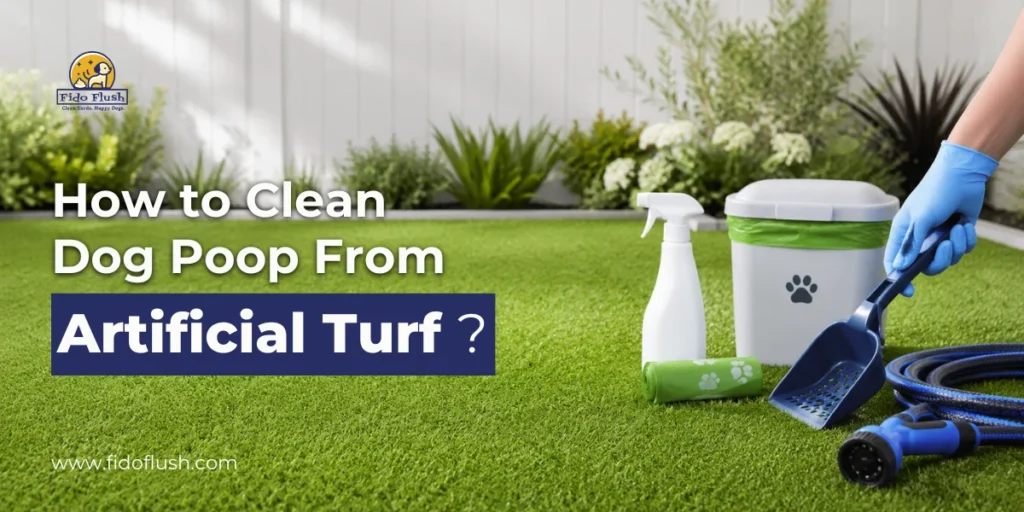
What You Need Before You Start
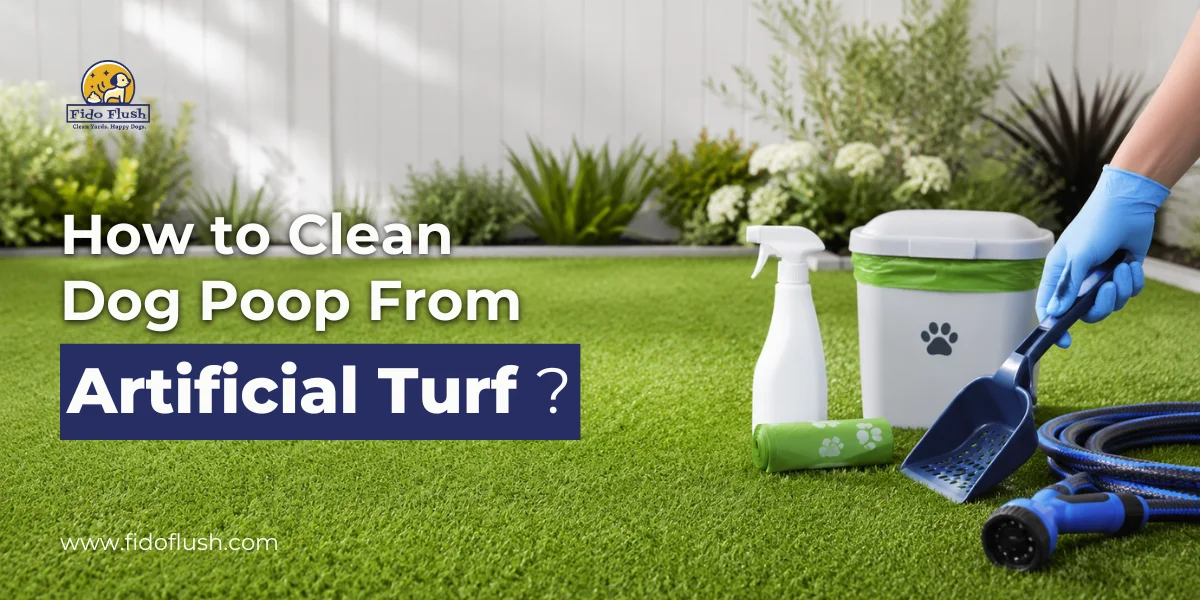
Having the right tools and products ready makes the process faster and more thorough.
For solid waste removal:
- Poop bags or disposable gloves
- A pooper scooper or garden spade
For cleaning and rinsing:
- Garden hose with adjustable spray nozzle
- Enzymatic pet waste cleaner (see product notes below)
- Stiff-bristled brush or turf rake
For deodorizing:
- Baking soda, or a commercial turf deodorizer
What to avoid:
- Bleach or bleach-based cleaners. These degrade synthetic turf fibers over time and are harmful to pets who walk on treated surfaces before thorough rinsing.
- Ammonia-based cleaners. These can damage turf and, because dog urine already contains ammonia, can actually attract dogs back to the same spot.
- Steam cleaners or high-heat tools. Extreme heat can warp or melt synthetic turf blades, particularly on darker colored turf that absorbs more heat in direct sun.
Step-by-Step: How to Clean Dog Poop From Artificial Turf
Step 1: Remove the Solid Waste Promptly
Pick up the solid deposit as soon as possible using a poop bag, gloves, or a scooper. The longer it sits, the more time bacteria have to work into the turf fibers and infill. In summer heat, even an hour makes a measurable difference in how much residue is left behind after removal.
For firm, well-formed stools, this is straightforward. Loose or liquid stool (diarrhea) requires more careful attention. Use a pooper scooper or a rigid card to collect as much solid material as possible without spreading it further across the turf surface.
Step 2: Rinse the Area with a Hose
Once the solid material is removed, rinse the area thoroughly with a garden hose. Use moderate pressure rather than a full jet setting, which can drive residue deeper into the infill. The goal at this stage is to flush bacterial residue and any remaining particles down through the turf’s drainage layer.
Rinse generously. Most pet turf is installed over a drainage system designed to handle water, so rinsing with a hose is safe and will not damage the installation. Rinse from the outer edges of the affected area toward the center rather than from the center outward, which prevents spreading contamination.
Step 3: Apply an Enzymatic Cleaner
Plain water removes visible residue but does not neutralize the bacteria or odor compounds left behind. This is where an enzymatic cleaner is essential.
Enzymatic cleaners work by introducing natural enzymes that break down the organic compounds in pet waste at a molecular level. This addresses the actual source of odor rather than masking it. Products like Simple Green Outdoor Odor Eliminator or Rocco and Roxie Pet Stain and Odor Eliminator are widely used for pet turf and are available at most US pet supply stores.
Apply the enzymatic cleaner according to the product instructions. Most require leaving the product on the surface for 5 to 10 minutes to allow the enzymes to work before rinsing.
If you prefer a DIY option, a 1:1 solution of white vinegar and water is a reasonable alternative for routine maintenance cleaning. It neutralizes odor through pH adjustment rather than enzymatic action, so it is less effective on heavy bacterial buildup but works well for regular upkeep between deeper cleans.
Step 4: Brush the Turf Fibers
After the cleaner has had time to work, use a stiff-bristled brush or turf rake to work it into the fibers and loosen any embedded material. Brush against the grain of the synthetic blades to expose infill and allow the cleaner to penetrate more effectively.
This step also helps maintain the appearance of the turf by keeping fibers upright rather than matted down from regular use and foot traffic.
Step 5: Rinse Thoroughly Again
Rinse the entire treated area again with the hose, making sure all cleaning product residue is flushed through the drainage layer. Leaving cleaner residue on the surface can attract dirt, create a sticky surface texture, or irritate pets’ paw pads.
Step 6: Deodorize if Needed
For persistent odor that does not resolve with the enzymatic clean, a deodorizing step is worth adding. Baking soda sprinkled across the affected area and left for 15 to 30 minutes before rinsing is a low-cost and effective option. Commercial turf deodorizers containing zeolite, a natural mineral that neutralizes ammonia odor, provide longer-lasting results in high-use areas.
Need a Cleaner Yard Without the Hassle?
Let Fido Flush handle the dirty work so your outdoor space stays fresh, clean, and ready to enjoy.
Handling Loose Stool and Diarrhea on Artificial Turf
Diarrhea on artificial turf requires a slightly different approach because liquid waste spreads across a wider surface area and penetrates more quickly into the infill.
Start by absorbing as much of the liquid as possible using paper towels, pressing gently rather than wiping, which spreads the material further. Once the bulk is absorbed, rinse the area with water to dilute and flush remaining material downward through the drainage layer.
Apply enzymatic cleaner more generously than you would for solid waste, covering the full spread of the original deposit plus a few inches beyond the visible boundary. Diarrhea carries the same bacterial content as solid stool but distributed across a wider area, so the treatment zone needs to match that spread.
If your dog has recurring diarrhea and you are cleaning turf frequently as a result, the underlying digestive issue is worth addressing with your vet. Yellow or loose stools that keep appearing are often a sign of a dietary or health issue that has a treatable cause.
Routine Maintenance to Prevent Buildup
One-off cleanups are manageable. The bigger risk with artificial turf and dogs is gradual accumulation of bacteria and odor compounds in the infill layer from repeated, incompletely cleaned deposits over time. Routine maintenance prevents this from becoming a problem.
Daily: Remove solid waste as soon as you notice it. This is the most impactful single habit.
Weekly: Rinse the full turf area with a hose, not just the spots where waste appeared. Urine and bacterial contamination spread beyond the visible deposit area.
Monthly: Do a full enzymatic clean of the turf surface, particularly in areas your dog uses most frequently as their bathroom spot. This addresses buildup that regular rinsing does not reach.
Seasonally: Check the drainage layer under the turf is flowing freely. Blocked drainage causes water and waste residue to pool rather than flush through, which amplifies odor and bacterial buildup. Top up infill if it has compacted or thinned from regular use.
Odor That Comes Back: What Is Causing It
If your turf smells fine right after cleaning but the odor returns within a day or two, the problem is almost certainly in the infill layer rather than on the surface. Surface rinsing and even enzymatic cleaning does not always penetrate deeply enough to address contamination that has worked its way into the sub-surface material over months of use.
Options for addressing deep infill odor include:
Zeolite infill replacement or top-up. Zeolite is a naturally occurring mineral used as artificial turf infill specifically because it absorbs and neutralizes ammonia and other odor compounds. Adding zeolite to the infill in high-use areas provides ongoing odor control between cleanings.
Infill-specific enzymatic treatment. Some enzymatic products are formulated to be left on the turf surface (rather than rinsed off immediately) so they penetrate into the infill layer over several hours. These are more effective for deep odor than standard spray-and-rinse products.
Professional turf cleaning. For turf that has developed persistent embedded odor despite regular home maintenance, a professional turf cleaning service with commercial-grade enzyme injection equipment can address infill contamination that surface treatments cannot reach.
The same principle applies to artificial turf as to natural grass: the longer waste is left in place before cleanup, the harder the resulting odor is to eliminate. This is why frequent, consistent removal is more effective than periodic deep cleans. Managing dog poop smell in outdoor spaces is always easier when the source is addressed quickly rather than allowed to accumulate.
Is Artificial Turf Safe for Dogs After Cleaning?
Yes, provided you are using pet-safe cleaning products and rinsing thoroughly. The key requirements are that the product is enzyme-based or vinegar-based rather than bleach or ammonia-based, and that it is fully rinsed from the surface before your dog has access again.
Most enzymatic cleaners are safe for pets once dry. Check the specific product label for re-entry guidance after application, as drying times vary.
One practical note for warm climates: artificial turf surfaces can get significantly hotter than air temperature in direct summer sun. In Southern California, turf surface temperatures can reach well above 100 degrees Fahrenheit on peak summer days. This affects both your dog’s comfort and paw safety, and it also means cleaning products evaporate faster and turf dries more quickly, which is generally helpful for maintenance but requires rinsing before the surface gets too hot to use comfortably.
The Case for Staying on Top of Waste Removal
The single most effective way to keep artificial turf clean and odor-free is to remove waste before it has time to cause problems. Every hour between deposit and cleanup is time for bacteria to multiply, odor compounds to develop, and material to work deeper into the infill.
For homeowners who find daily cleanup difficult to maintain consistently, whether because of a busy schedule, multiple dogs, or a large turf area, professional pet waste removal takes that responsibility off the list entirely. Regular scheduled service ensures the turf surface is never carrying multiple days of accumulation, which is the primary driver of embedded odor and bacterial buildup that surface cleaning cannot easily reverse.