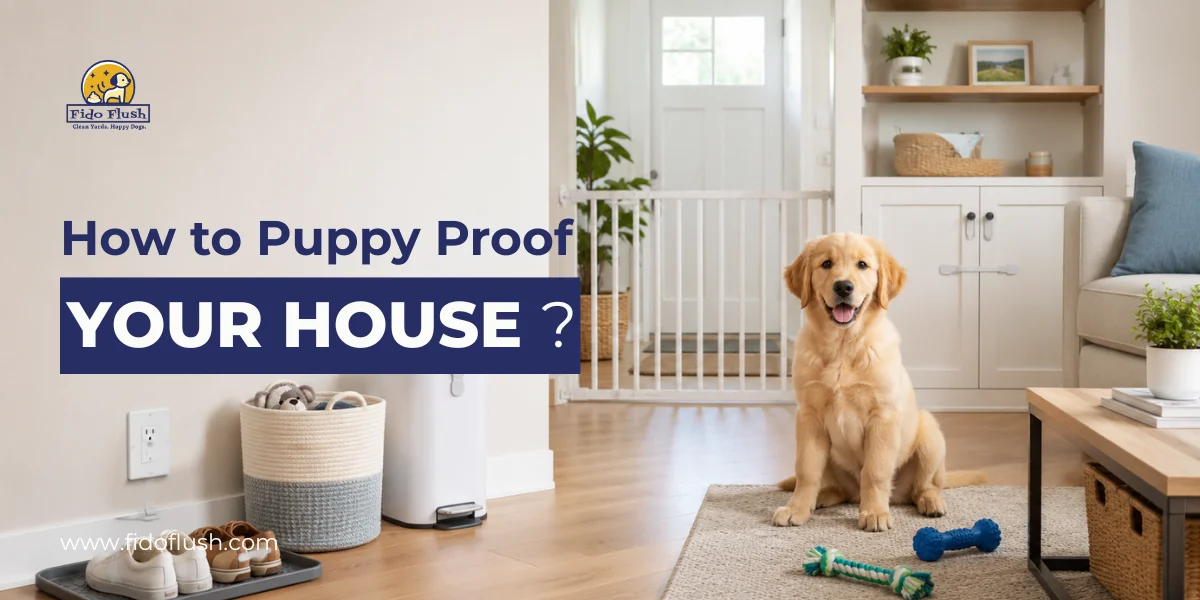
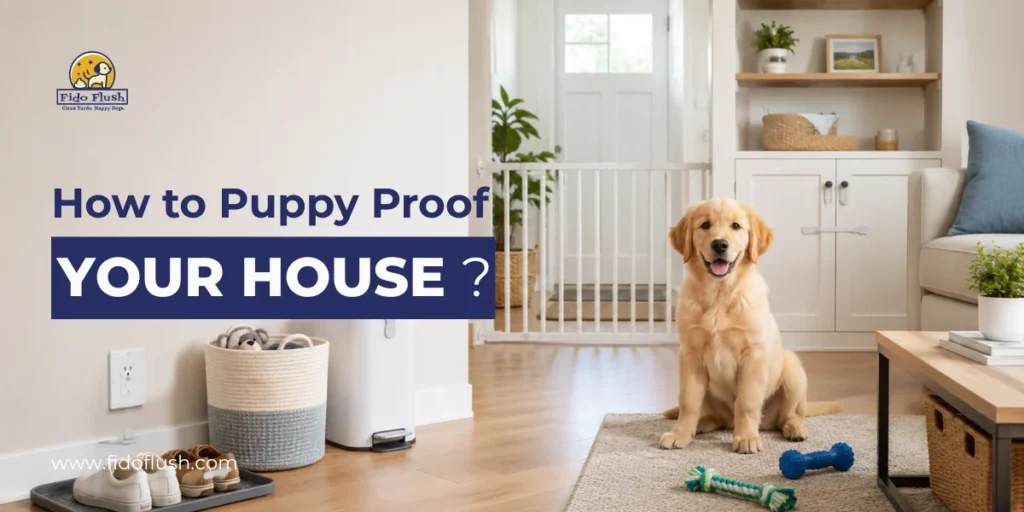
Bringing a puppy home is exciting. It is also the moment your living space quietly becomes an obstacle course of chewing hazards, escape routes, and things that look like toys to a curious eight-week-old but are decidedly not.
Puppies explore entirely through their mouths and noses. They have no sense of what is dangerous, no concept of boundaries, and zero impulse control. The responsibility for keeping them safe falls entirely on what you do before they arrive and how you manage their environment in those first critical months.
This guide walks through every area of the home with specific, practical steps to puppy proof your house before your new dog arrives, or as soon as possible if they are already home.
Why You Should Puppy Proof Your Home
The average puppy chews, ingests, or gets into something hazardous within the first week of arriving in a new home. This is not an exaggeration. Puppies investigate everything that is at their level, and in a typical American home, that includes electrical cords, cleaning products, medications, toxic plants, small objects that fit in their mouths, and whatever is in the trash.
The ASPCA Animal Poison Control Center handles hundreds of thousands of calls each year related to pets ingesting toxic substances, and a significant proportion of those involve young dogs getting into household items. Most of those incidents are preventable with basic preparation.
Beyond safety, puppy proofing also protects your home. A puppy left unsupervised in an un-proofed space will chew baseboards, dig at carpet, pull items off shelves, and create damage that is expensive to repair. Proofing the space reduces both risk to the puppy and damage to the home.
Before You Start: Think Like a Puppy
The most useful mental shift before puppy proofing is to get down to floor level, literally. Kneel or crouch and look at each room from the height of a small dog. What is accessible? What dangles? What can be pulled down, chewed, or squeezed behind?
Puppies can fit into surprisingly small gaps, reach further than expected when they jump, and are motivated by scent to investigate areas you would not think of as interesting. The floor-level perspective catches hazards that are invisible when you are standing.
Also consider that what is safe for an adult dog is not always safe for a puppy. Adult dogs have learned limits through training and experience. A puppy has neither.
Puppy Proofing Your Living Room
The living room is typically where puppies spend the most unsupervised time, and it contains more hazards than most owners initially recognize.
Electrical cords are one of the most serious risks. Chewing through a live cord can cause burns, electrical shock, or worse. Thread cords through cord concealers or flexible tubing, secure them to baseboards with cable clips, or reroute them completely out of reach. Any cord your puppy can access is a hazard.
Remote controls, gaming controllers, and small electronics are attractive chewing targets and can contain batteries that are toxic if swallowed. Store these off the floor when not in use.
Houseplants are commonly overlooked. Many popular houseplants are toxic to dogs, including pothos, philodendron, sago palm, peace lily, and dieffenbachia. The ASPCA maintains a comprehensive list of toxic plants at aspca.org/pet-care/animal-poison-control/toxic-and-non-toxic-plants. Move any plant on that list to a space your puppy cannot access, or replace it with a pet-safe variety.
Furniture gaps and tight spaces behind sofas and entertainment units can trap a small puppy or give them access to cords and dust. Block gaps with furniture or foam blockers.
Rugs and carpets do not pose a danger themselves, but they can hide small objects. Check under and around rugs for coins, rubber bands, hair ties, and other small items that are choking hazards.
Trash cans need secure lids or to be relocated to a cabinet. A puppy that discovers the trash once will return to it repeatedly. If your dog already has a habit of raiding household bins, keeping trash secured is just as important for adult dogs as it is for puppies.
Puppy Proofing Your Kitchen
The kitchen presents a concentrated mix of hazards: toxic foods, sharp objects, cleaning chemicals, and a trash can your puppy will be highly motivated to reach.
Secure lower cabinets with childproof latches. Under-sink cabinets typically store cleaning products, dish soap, and other chemicals that are toxic to dogs. A childproof latch that a puppy cannot paw open is a simple and inexpensive fix.
Store toxic foods out of reach. The list of common foods that are dangerous to dogs includes chocolate, grapes and raisins, xylitol (found in sugar-free gum and many baked goods), onions, garlic, macadamia nuts, and avocado. These should be in closed cabinets, not on counters or low shelves accessible to a jumping or climbing puppy.
Secure the trash can. A kitchen trash can is one of the most appealing things in the house to a puppy. It smells like food, it is often at ground level, and the contents include everything from food scraps to packaging to chicken bones, which are a serious choking and internal injury hazard. Use a trash can with a locking lid, or store it in a cabinet with a latch.
Keep the stove area clear. Puppies that develop counter-surfing habits early can knock items off stoves, including pots of hot liquid. Appliance knobs at puppy height are also a risk. Consider knob covers or getting into the habit of removing knobs when the stove is not in use.
Sharp objects including knives, scissors, and skewers should be stored in drawers or knife blocks rather than left on counters where a jumping puppy might knock them down.
Close the dishwasher. An open dishwasher door is accessible at puppy height and contains residual detergent, sharp utensils pointing upward, and various food residue that will attract a curious puppy.
Puppy Proofing Your Bathroom
The bathroom is a smaller space but contains several concentrated hazards.
Keep the toilet lid down. Small puppies can fall into a toilet and struggle to get out. Some cleaning tablets also release chemicals into the bowl water that are harmful if ingested.
Store all medications securely. This is one of the most critical steps in any puppy proofing checklist. Medications, both prescription and over-the-counter, are among the most common causes of puppy poisoning. Even pill bottles with childproof caps are not puppy-proof. All medications should be in a cabinet above counter height or secured with a latch.
Secure personal care products. Razors, hair ties, cotton swabs, soap, toothpaste (many contain xylitol), and lotions should be stored in drawers or cabinets rather than left on counters or the edge of the tub. Hair ties and rubber bands are a particular risk because they are small, stretchy, and easy for a puppy to swallow but difficult to pass.
Cleaning products under the sink need the same latch protection as the kitchen. Bleach, toilet bowl cleaner, and other bathroom chemicals are highly toxic.
Keep the bathroom door closed when not in use, particularly in the early weeks when the puppy is still learning the boundaries of the house.
Puppy Proofing Your Bedrooms
Bedrooms tend to feel like low-risk spaces but contain several things that are easily overlooked.
Medications on nightstands are a frequent source of puppy poisonings, particularly sleeping aids, pain medications, and antihistamines. Move them to a bedside cabinet with a latch or a high shelf.
Loose change, jewelry, and hair accessories on dressers and nightstands are choking hazards for small puppies who can jump onto low furniture or pull items off the edge.
Laundry is more of a risk than it sounds. Socks, underwear, and small clothing items are commonly swallowed by puppies and can cause intestinal obstruction, which is a surgical emergency. Keep laundry in a hamper with a lid.
Electrical cords for lamps, phone chargers, and clocks need the same protection as living room cords. Charger cables in particular are thin, flexible, and attractive to chewing puppies.
Under-bed access creates a hiding spot where puppies can get stuck or find items that have rolled under the furniture. Blocking under-bed access with bed skirts or foam blockers is worth considering during the puppy phase.
Need a Cleaner Yard Without the Hassle?
Let Fido Flush handle the dirty work so your outdoor space stays fresh, clean, and ready to enjoy.
Puppy Proofing Your Garage and Yard
The outdoor environment requires its own set of precautions, and the yard is where many puppies spend significant time, especially as they begin house training.
Fencing is the foundational requirement. The American Kennel Club recommends fencing that is high enough to prevent jumping and has no gaps a small puppy can squeeze through. For most breeds, a minimum of four feet is needed, though larger or more athletic breeds need six feet or more. Check the entire perimeter for gaps at ground level, particularly at corners and gate hinges.
Remove toxic plants. Many common garden plants and landscaping shrubs are toxic to dogs. Sago palm is particularly dangerous and commonly used in Southern California landscaping. Oleander, azalea, lantana, foxglove, and lily of the valley are others to remove or relocate away from puppy access. The ASPCA’s toxic plant database is the most comprehensive reference for this.
Check for standing water. Small water features, birdbaths at ground level, and even puddles after irrigation can be drowning hazards for very small puppies. Pools need a fence around them specifically, not just the yard perimeter.
Keep fertilizers, pesticides, and herbicides locked away. These are highly toxic to dogs. After any lawn treatment, keep your puppy off the treated area for the period specified on the product label, typically 24 to 72 hours depending on the product. Puppies and children walking across treated surfaces can track chemicals inside on their paws and shoes. Removing footwear at the door and wiping paws after outdoor time during and after lawn treatment periods is a practical step to prevent this from being tracked onto indoor surfaces.
Secure the garage. Garages contain an unusually high concentration of puppy hazards: antifreeze (which tastes sweet but is extremely toxic), motor oil, garden chemicals, sharp tools, small hardware items, and often trash. If your puppy has any access to the garage, every chemical and sharp object needs to be on a high shelf or in a locked cabinet. Antifreeze spills are particularly dangerous because even a small amount is lethal.
Clear the yard of waste before your puppy arrives. Dog waste, whether from your new puppy or residue from previous pets, is both a health hazard and a driver of coprophagia. Puppies that have access to feces in the yard are more likely to develop the habit of eating it. Establishing a clean yard from day one and maintaining it with regular removal reduces this risk significantly. A consistent waste removal routine, or a scheduled professional service, makes this practical to keep up alongside everything else new puppy ownership involves.
Check for escape routes beyond the fence. Gaps under gates, spaces where the fence meets the house, and any section where the ground is lower than the fence base can all create exits for a small puppy motivated to explore.
Setting Up a Safe Puppy Space Inside
Even in a fully puppy-proofed home, having a designated safe zone for your puppy when they cannot be directly supervised is one of the most useful things you can do.
A playpen or exercise pen creates a contained area where the puppy can move around, access their water and toys, and rest without access to hazards in the rest of the house. Paired with a crate for sleeping, this setup gives your puppy a structured environment that supports house training while keeping them safe when your eyes are elsewhere.
The safe space should be in an area of the house where the puppy can hear and be near family activity, not isolated in a laundry room or garage. Puppies this age are developing social bonds, and isolation increases anxiety, which in turn can lead to destructive behavior when they do have access to the rest of the house.
Puppy Proofing and House Training Work Together
One thing worth understanding is that puppy proofing and house training are not separate projects. They work together. A puppy that is contained to a well-managed space is easier to house train because you can monitor their cues and respond consistently. A puppy with free access to an un-proofed house is harder to train and more likely to have accidents in areas you will not discover until later.
Setting boundaries through gates and playpens while your puppy learns the house rules reduces the number of accidents you are dealing with and makes the training process significantly faster. If you are in the early stages of establishing a routine, a structured approach to house training makes the whole experience less stressful for both you and the puppy.
Benefits of Puppy Proofing Your Home
It keeps your puppy alive and healthy. The most direct benefit. Ingestion of household toxins and foreign objects is one of the leading causes of emergency vet visits for young dogs. Most of those emergencies are preventable.
It protects your home. A puppy with access to electrical cords, furniture, and carpeting without supervision will cause expensive damage. Proofing the space reduces what they can access and damage.
It supports house training. Managing your puppy’s environment helps establish the habits and boundaries that house training depends on.
It reduces your stress. Chasing a puppy away from hazards or discovering damage after the fact is exhausting. A proofed space means you spend less energy managing crises and more enjoying your new dog.
It builds trust gradually. Puppies that are safely managed in their first months learn boundaries and develop self-regulation. Giving them too much freedom too soon sets them up to fail. Gradually expanding access as they mature and prove themselves is how you build a dog that can eventually be trusted with the whole house.
Conclusion
Puppy proofing your house is not a one-afternoon project. It requires thinking through each room and the yard at your puppy’s level, anticipating what they will explore and chew, and making changes before those explorations happen rather than after.
The investment of time upfront prevents vet emergencies, avoids costly home damage, and gives your puppy the safest possible start in their new environment. Start with the highest-risk areas, the kitchen, bathroom, and garage, and work outward from there. Get the yard secured and cleaned before their first outdoor session. And establish a designated safe space indoors for the times you cannot provide direct supervision.
Frequently Asked Questions
What is the most important thing to puppy proof first?
What household items are toxic to puppies?
Common hazards include chocolate, xylitol, grapes and raisins, onions, garlic, all medications (human and pet), cleaning products, antifreeze, certain houseplants (pothos, sago palm, oleander), and small objects that are choking hazards. The ASPCA Animal Poison Control Center at aspca.org is the most comprehensive public resource for a full list.