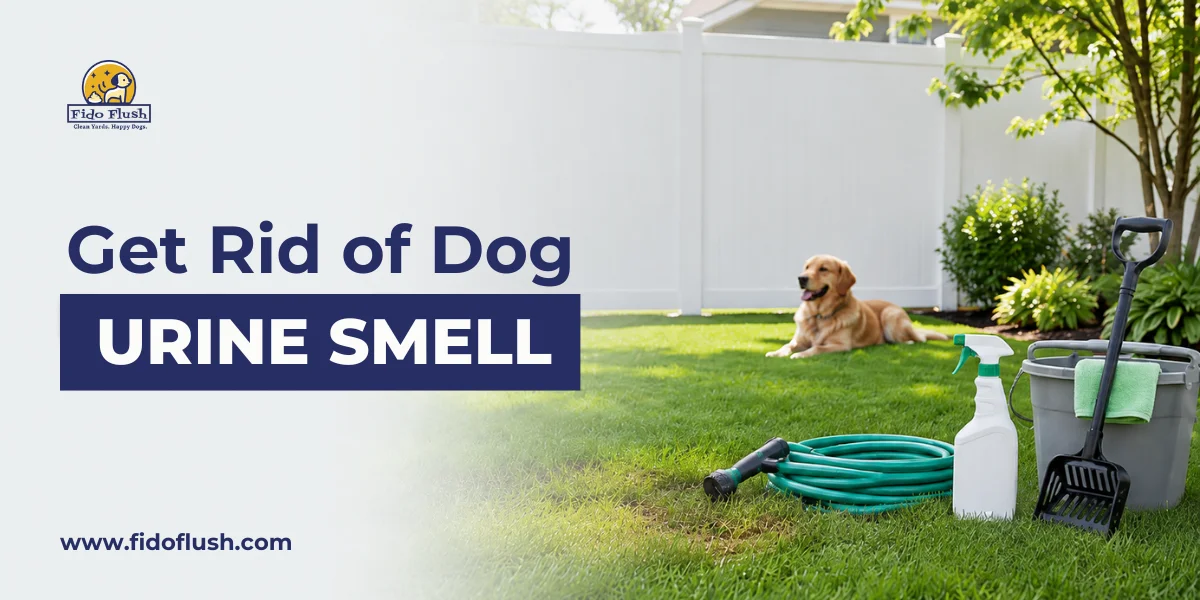
Dog urine smell in the backyard is one of the more frustrating ongoing problems dog owners deal with. The odor is sharp, it lingers, and it tends to come back stronger in heat or after rain even when the yard looks perfectly clean. If you have been hosing down the same patch of grass for weeks with no lasting result, the issue is not your effort. It is your method.
This guide explains why dog urine smell is so persistent outdoors, get rid of dog urine smell, and how to prevent it from rebuilding after you have cleared it.
Why Dog Urine Smells So Bad Outside
Dog urine contains urea, creatinine, uric acid, ammonia, and various hormones. The immediate ammonia component is responsible for the sharp initial odor. As bacteria in the soil break down the urea, they release additional ammonia compounds over time, which is why a spot that smelled mild the first day can smell progressively worse over the following week without any new deposits.
Uric acid is the most persistent component. Unlike urea and ammonia, uric acid does not dissolve in water. Plain hosing down of the area dilutes the other compounds but leaves uric acid crystals in the soil and grass fibers. When heat or humidity rises, those crystals reactivate and release odor again. This is why the smell returns so reliably after a warm day or after rain.
In Southern California’s summer climate, this cycle is particularly pronounced. High temperatures accelerate bacterial activity in the soil, which speeds up the odor-releasing breakdown of urine compounds. A backyard that manages to smell tolerable in February can become genuinely unpleasant by June even without any change in your dog’s habits or your cleanup routine.
Will Baking Soda Neutralize Dog Urine on Grass?
This is one of the most searched questions on this topic, and the answer is: partially, temporarily, and with limitations.
Baking soda (sodium bicarbonate) works by raising the pH of the treated area, which temporarily neutralizes the acidic compounds in urine including some of the ammonia. It is most effective when applied to a fresh, moist urine spot before the compounds have dried and worked into the soil.
To use it: sprinkle baking soda generously over the affected area, let it sit for 10 to 15 minutes, then rinse thoroughly with water. For surface-level, recent odor on concrete, pavers, or artificial turf, this works reasonably well as a quick fix.
The limitation is uric acid. Baking soda does not break down uric acid crystals. It can mask the ammonia smell temporarily, but the uric acid remains in the soil and will reactivate in heat or moisture. For grass that has absorbed weeks or months of urine deposits, baking soda is a supplementary tool, not a complete solution.
It is also worth being cautious with the amount used on grass. Baking soda is alkaline. Heavy or repeated application to the same spot can raise soil pH to the point where it damages grass roots. Light, infrequent application followed by thorough rinsing is the safe approach.
How to Neutralize Dog Urine on Grass: Step by Step
For Fresh Spots
Act within the first few minutes if possible. Fresh urine that has not had time to soak deep into the soil is significantly easier to neutralize than dried or aged deposits.
Water the spot immediately and heavily. The goal is dilution, flushing the urine compounds out and away from the grass root zone before they concentrate. Two minutes of direct hose flow on a fresh spot is far more effective than the same hosing done an hour later.
If you can catch it fresh, a light application of baking soda after the initial rinse adds some pH neutralization before a final rinse.
For Existing Odor Areas
Step 1: Identify the high-use spots. Dogs return to the same areas repeatedly due to scent marking. These spots accumulate urine compounds in the soil over months and need more targeted treatment than a general yard rinse.
Step 2: Rinse first to rehydrate the soil. Apply water to the affected area until the soil is saturated. Rehydrating the soil allows cleaning products applied next to penetrate more deeply rather than sitting on a dry surface.
Step 3: Apply an enzymatic cleaner. This is the step most DIY approaches skip, and it is the most important one for persistent odor. Enzymatic cleaners contain active cultures of bacteria that produce enzymes specifically designed to break down uric acid, urea, and ammonia compounds at the molecular level. This addresses the actual odor source rather than masking it.
Products like Simple Green Outdoor Odor Eliminator and Nature’s Miracle Yard Odor Eliminator are widely available at US pet supply stores and are formulated for outdoor soil use. Apply according to product instructions, keeping the treated area moist during the dwell time so the bacterial cultures can stay active. Avoid applying in the middle of a hot summer day; early morning or evening application gives the product more time to work before the sun evaporates the moisture.
Step 4: Allow to dry completely, then assess. In many cases, one enzymatic treatment resolves the odor. Heavily saturated spots from months of use may need a second or third treatment with a few days between applications.
Step 5: Rinse after the dwell time is complete. A final rinse after the product has worked removes the broken-down compound residue from the grass surface.
Need a Cleaner Yard Without the Hassle?
Let Fido Flush handle the dirty work so your outdoor space stays fresh, clean, and ready to enjoy.
Does Vinegar Remove Dog Urine Smell from Grass?
White vinegar is often recommended as a natural alternative to enzymatic cleaners. It works through pH adjustment, similar to baking soda but from the acidic direction, which can neutralize some ammonia compounds.
The same limitation applies: vinegar does not break down uric acid. It can reduce surface-level ammonia odor, but for established outdoor urine smell in soil, it is not as effective as enzymatic treatment.
There is also an important caution for grass. Undiluted white vinegar is acidic enough to damage or kill grass, particularly on spots that are already stressed from urine damage. If you use it, dilute it with equal parts water, apply lightly, and rinse the area thoroughly afterward. Do not apply it repeatedly to the same grass area.
For hard outdoor surfaces, concrete, pavers, or artificial turf, vinegar is a more practical option since there is no plant root zone at risk.
Preventing Dog Urine Smell From Returning
Cleaning an existing odor problem is one step. Preventing it from rebuilding requires addressing what drives the accumulation.
Redirect your dog to designated spots. Dogs return to the same areas because they can smell their own previous deposits. Once a spot has been thoroughly cleaned with an enzymatic product, retraining your dog to use a different area of the yard, ideally gravel, mulch, or a designated patch of sacrificial turf, prevents concentrated urine from building up on your primary lawn.
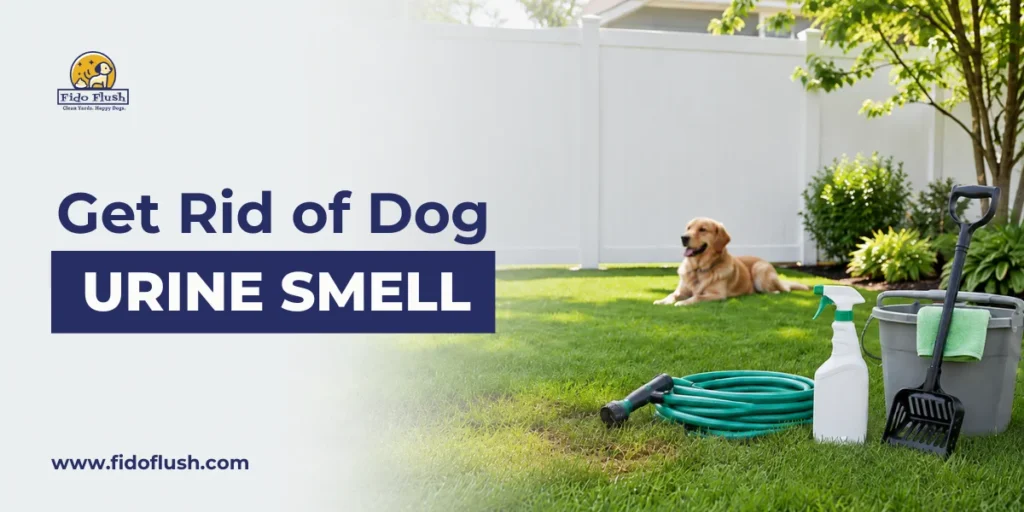
Dilute fresh deposits immediately. Keeping a garden hose with a spray nozzle at the back door and rinsing the spot immediately after your dog urinates is the single most effective prevention habit. Dilution within the first few minutes dramatically reduces how much uric acid works into the soil.
Water the lawn deeply and regularly. Regular deep watering naturally dilutes surface urine compounds and keeps them from concentrating in the root zone. Shallow, infrequent watering allows compounds to sit at the surface longer. In Southern California’s dry summers, irrigation scheduling matters more than most owners realize for managing this.
Evaluate your dog’s diet and hydration. Highly concentrated urine causes more damage and odor than dilute urine. Dogs that are well-hydrated produce less concentrated urine. Dogs eating high-protein diets naturally produce more nitrogen-rich urine. If your yard grass damage and odor are severe, it is worth discussing with your vet whether your dog’s water intake is adequate. Urine issues and how to prevent dog urine from killing grass are connected more directly to hydration and diet than most owners realize.
Add soil amendments in high-use areas. Garden lime applied to high-use urine spots can help raise soil pH after acid damage and neutralize some ammonia compounds. Dolomite lime is the most commonly recommended variety for this. Apply sparingly and water in thoroughly since over-application shifts soil pH too far in the other direction.
The Role of Dog Poop in Backyard Odor
A detail worth addressing specifically: many dog owners treating urine smell are dealing with a combined odor problem. Dog feces left in the yard decomposes and releases its own distinct odor compounds, and in warm weather the two sources, urine in the soil and decomposing feces on the surface, create a layered odor problem that urine treatment alone will not fully resolve.
If you are treating the yard for urine smell and finding the results inconsistent, check whether accumulated feces is contributing to the overall outdoor odor. The yard odor from dog waste is a separate problem with its own treatment, and addressing both simultaneously gives you the most complete result.
Hard Surfaces: Concrete, Pavers, and Decking
Dog urine on hard outdoor surfaces behaves differently from urine in soil. There is no ground to absorb and dilute it, so it concentrates on the surface and dries into the porous material.
For concrete and pavers, the treatment process is:
Rinse first to remove any surface residue. Apply enzymatic cleaner directly to the surface and allow the full dwell time specified on the product. For particularly porous concrete, a second application may be needed. Scrub with a stiff brush to work the product into the pore structure. Rinse thoroughly.
Sealing concrete or pavers in high-use dog areas after cleaning reduces future absorption and makes subsequent cleanup significantly easier.
For composite or wood decking, check that any product used is listed as safe for that surface material. Enzymatic cleaners are generally safe for sealed wood but should be tested in an inconspicuous area first.
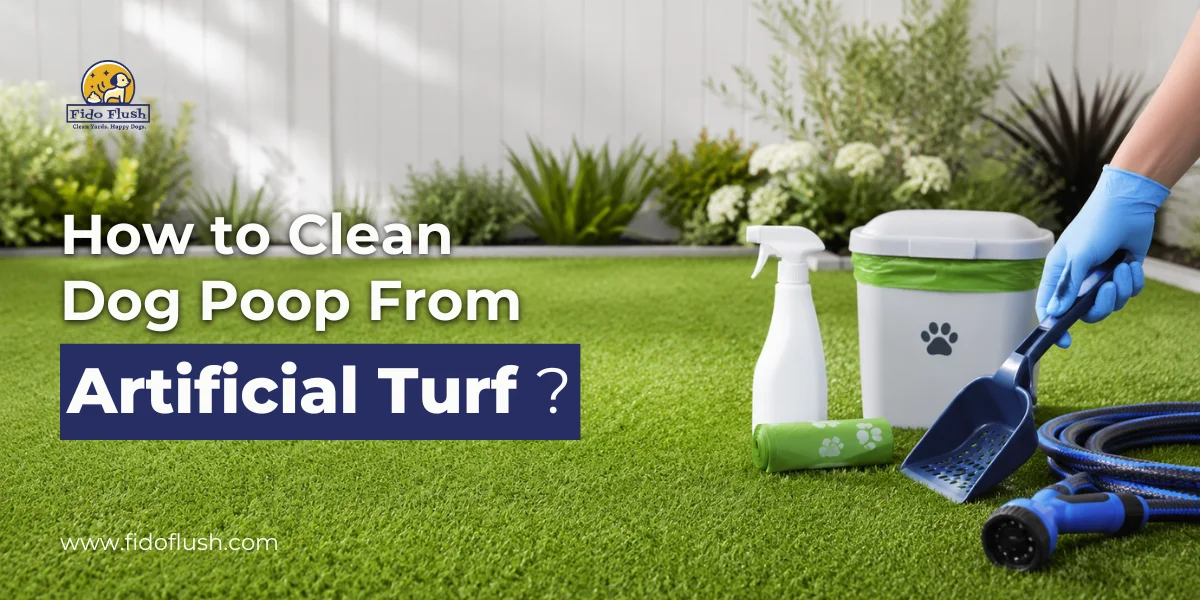
Artificial Turf and Dog Urine Smell
Artificial turf presents a specific challenge. Urine drains through the turf surface but leaves uric acid and ammonia compounds in the synthetic fibers and infill material. Without soil microbes to process those compounds over time, the smell can build up persistently in the infill layer even after the turf surface looks clean.
Regular hosing alone does not address uric acid in the infill. The same enzymatic treatment approach applies: rinse first, apply enzymatic cleaner, allow dwell time keeping the surface moist, then rinse. For high-use artificial turf areas, zeolite infill adds ongoing odor control between cleanings by absorbing ammonia compounds before they off-gas.
When the Smell Is Coming Back Despite Cleaning
If you have used enzymatic cleaners and the smell returns within a day or two, the most likely explanation is one of three things:
The soil contamination is deeper than surface treatment reaches, meaning the spot has months of accumulated deposits and needs multiple treatments with a few days between each.
The enzymatic product dried out too quickly during the dwell time, reducing its effectiveness. Morning or evening application in summer, with the product kept moist during the treatment period, addresses this.
Your dog continues to use the same spot and is re-depositing before the previous treatment has fully resolved. Redirecting your dog to a different area during the treatment window gives the product time to work without new deposits being added on top.
If persistent odor remains after multiple treatments and other steps, a professional yard deodorizing service has access to commercial-grade enzymatic treatment at concentrations higher than consumer products, applied in a way that reaches deeper into the soil profile for stubborn cases.
Conclusion
Getting rid of dog urine smell in your backyard requires more than hosing the area down. The persistent component, uric acid, does not dissolve in water and reactivates with heat and moisture until it is broken down at the molecular level by enzymatic treatment. Baking soda and vinegar have a role as supplementary tools for fresh spots, but enzymatic cleaners are the only product type that addresses the root cause of persistent outdoor urine odor.
Prevention matters as much as treatment. Rinsing fresh spots immediately, redirecting your dog to lower-impact areas, and maintaining consistent hydration reduces how much odor builds between treatments and keeps the yard more manageable long term.