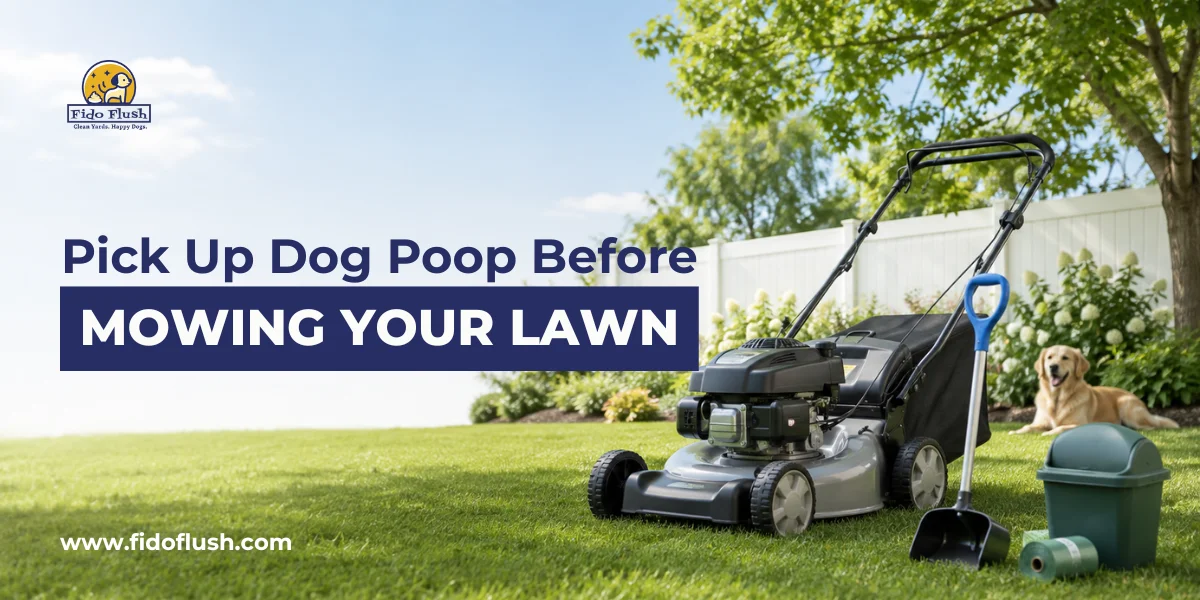
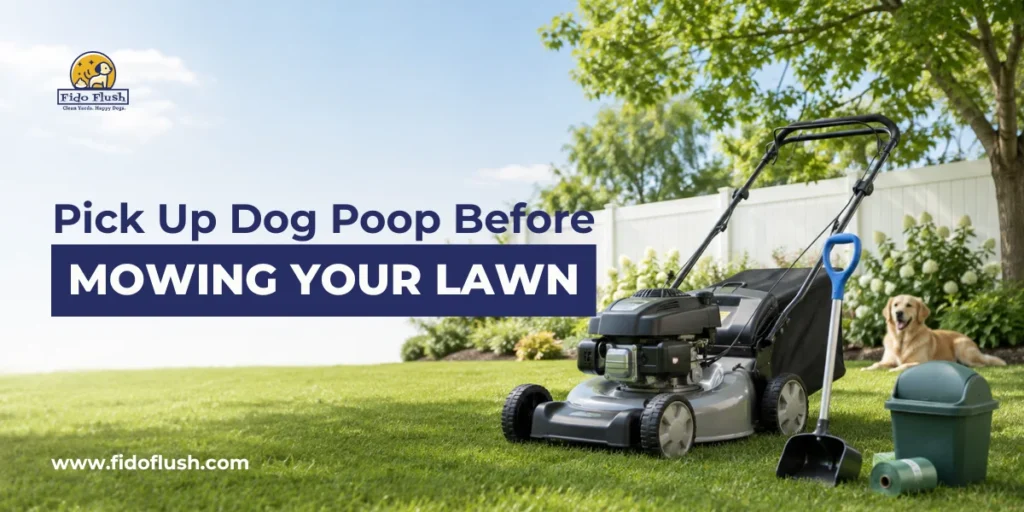
Mowing day arrives, the yard needs cutting, and there is dog poop scattered across the lawn. The temptation to just run over it and deal with it later is real, especially when you are short on time. But mowing over dog waste is one of those shortcuts that creates a significantly bigger problem than the one it avoids.
This guide explains exactly what happens when you mow over dog poop, why it matters beyond just being unpleasant, and what a practical pre-mow cleanup routine looks like for households with dogs.
What Actually Happens When You Mow Over Dog Poop
When a lawn mower blade hits a pile of dog waste, it does not simply move it to the side. Depending on the mower type and the consistency of the waste, it either shreds and distributes the material across a wide area of your lawn, packs it into the underside of the mower deck and around the wheels, or both.
Bacterial spread across the entire lawn. A single gram of healthy dog feces contains approximately 23 million fecal bacteria, according to the EPA. When a mower blade shreds and disperses that deposit, those bacteria are distributed across a much wider surface area than the original deposit covered. Anyone walking barefoot, children playing on the grass, or pets rolling in the yard are now in contact with contaminated ground that looks perfectly clean.
Contaminated mower equipment. Waste that packs into the underside of the mower deck, around the blade assembly, or into wheel grooves is difficult to clean and transfers to every other part of the lawn the mower travels over in the same session. It can also clog the blade mechanism, reduce mowing efficiency, and create a foul smell every time the mower is used until it is thoroughly cleaned.
Nitrogen burn distributed more widely. Dog feces contains a high concentration of nitrogen, which at the levels present in waste burns and kills grass rather than fertilizing it. Shredding and spreading that nitrogen over a larger grass area distributes the burn potential across more of your lawn. Instead of one brown spot, you risk a pattern of damage across the mow path.
Fly attraction. Flies are drawn to dog waste and begin laying eggs within hours of exposure in warm weather. Spreading shredded waste across the lawn surface significantly increases the surface area available for fly activity, which then affects the entire outdoor space rather than isolated spots.
The Mower Damage Problem
Most homeowners do not think about mower damage until it is already happening. Jason McCausland, National Technical Coordinator at Weed Man, a national lawn care company, has noted that while mowers can handle small amounts of pet waste, larger accumulations create real mechanical risk. Waste that builds up around blades or wheels can cause the mower to lose traction on the lawn and degrade performance over time.
Beyond traction, the biological material in dog feces is corrosive over time. Residue left in the blade housing promotes rust and degrades the undercarriage of the mower. Any homeowner who has ever had to deep clean a mower deck will attest that poop residue is one of the more unpleasant cleaning tasks, and it is entirely avoidable.
If you do accidentally mow over waste before cleanup, the mower needs to be cleaned before its next use. Disconnect the spark plug for safety, tip the mower on its side, and rinse the undercarriage with a hose. Follow with a scrub using a stiff brush and diluted enzymatic cleaner, rinse again, and allow to dry completely before storage.
The Lawn Health Angle
Dog poop and lawn health are more directly connected than most homeowners manage them as. The same nitrogen overload that burns grass under a deposit when left in place is spread more broadly when the deposit is mowed over, and the bacteria in the waste further stress the root zone of the grass below.
Lawns in Southern California are already under heat stress during summer months, and dog waste compounds that stress by killing grass through both chemical burn and bacterial competition with healthy soil microbes. Spreading that effect by mowing over waste trades one concentrated dead spot for a wider pattern of stressed turf.
The fix for existing lawn damage from dog waste requires both cleanup and soil recovery. If patches are already showing brown or dead areas, the soil underneath has likely accumulated nitrogen and bacterial residue over time. Rinsing those areas thoroughly after cleanup dilutes the residue, and allowing the grass to recover with adequate watering gives the root system a chance to come back. For damage that has progressed further, overseeding in fall after consistent cleanup is the most reliable lawn recovery path.
Health Risks: Why Spreading Waste Matters
The health implications of mowing over dog poop are not limited to the inconvenience of a dirty mower. When waste is distributed across the lawn surface, the pathogens it contains become a broader exposure risk for everyone who uses the outdoor space.
The CDC specifically identifies dog waste as a source of several zoonotic pathogens, including Toxocara canis (roundworm), hookworm larvae, Giardia, Campylobacter, and E. coli. Roundworm eggs are particularly persistent, remaining viable in soil for months to years after the waste has visually decomposed. When mowing distributes that material, those eggs are present across a wider area of the lawn than the original deposit would have affected.
Children are the highest-risk group because they play directly on and in contact with grass surfaces and frequently transfer hands to mouth during outdoor play. The genuine health risks of dog feces in yards where children spend time are a strong argument for consistent pre-mow cleanup regardless of how manageable the yard otherwise feels.
The Odor Multiplier Effect
One consequence of mowing over dog waste that most people discover the hard way is the immediate and dramatic smell that results. The mowing action aerosolizes the odor compounds in the waste, producing a much more intense and widespread smell than the deposit itself created sitting on the grass.
That smell does not dissipate quickly. Dispersed waste residue on grass blades and in the lawn surface releases odor every time the grass is disturbed, walked on, or warmed by the sun. In Southern California’s summer heat, this can make an entire section of the yard unpleasant to spend time near for days after the fact.
Persistent yard odor that has built up over time from accumulated waste history can become embedded in the soil, where it returns in heat or after rain even after the surface looks clean. If your yard is carrying that kind of embedded odor from previous accumulation, getting rid of dog poop smell from the yard requires treating the soil, not just cleaning the surface.
Building a Pre-Mow Cleanup Habit That Works
The solution is simple in concept: always check and clear the yard before mowing. The challenge is making it a consistent habit rather than something that happens only when you remember.
Tie the pre-mow check to your mowing preparation. Treat yard clearing as the first step of the mowing process itself rather than a separate task. Before you pull the mower out, walk the yard. By building the check into the starting routine, it becomes automatic.
Use the right tools to make it faster. A long-handled pooper scooper means you are not bending over repeatedly across the full yard. Keep bags nearby so the scoop-and-bag process is efficient rather than requiring a separate trip. For larger yards with multiple dogs, a dedicated rolling cart with a bag attachment makes the pre-mow walk faster.
Map where your dog goes. Most dogs have preferred spots in the yard. Knowing which areas to check first means a faster, more targeted pre-mow scan rather than a slow sweep of the entire lawn.
Check after mowing too. A post-mow scan that happens while you are already in the yard adds very little time and catches any deposits your dog may have made since the last cleanup. For a household keeping up with regular pickup schedules, the pre-mow check is often just a confirmation that the routine is working rather than a significant additional task.
What to Do If You Missed a Spot
If you mow over waste despite your best efforts, here is how to manage it:
Stop mowing in that section once you realize what happened. Continuing to mow spreads the contamination further.
Mark the affected area so you can treat it after the mow session.
Complete mowing in clean sections of the yard then come back to address the contaminated zone.
Rinse the affected grass area with a hose to dilute the distributed residue and push it through the surface and into the soil drainage layer.
Clean the mower before its next use as described earlier.
Apply an enzymatic cleaner to the affected lawn area once the initial rinsing is done. This addresses the bacterial residue that plain water does not neutralize.
Seasonal Timing Makes This More Important
The consequences of mowing over dog waste scale with temperature. In cooler months, bacteria are less active and the odor release from disturbed waste is less intense. In summer, particularly in Southern California’s July and August heat, the same mow-over event produces dramatically worse results. Bacterial activity is running faster, odor compounds volatilize more rapidly in heat, and the spread of waste across warm grass creates conditions that attract flies immediately.
Warm weather is also when yards see the most human use, meaning any contamination distributed during a summer mowing session affects outdoor living spaces when they are being used most actively. The case for consistent pre-mow pickup in summer is significantly stronger than it is in winter.
The Simplest Prevention: Consistent Yard Maintenance
All of the consequences above, mower damage, lawn burn, pathogen spread, and odor, share the same root cause: waste left in the yard long enough to become a mowing-day problem. A yard that is cleared on a consistent schedule, ideally twice a week or more, rarely presents a significant pre-mow task because there is very little to find.
The pre-mow cleanup problem is mostly a symptom of infrequent yard maintenance. Households that stay on top of removal throughout the week find that mowing day involves a quick scan rather than a significant cleanup effort.
For dog owners in Los Angeles who want to take this off their task list entirely, regular professional pet waste removal keeps the yard consistently clear so that mowing day is never complicated by accumulated waste.
Need a Cleaner Yard Without the Hassle?
Let Fido Flush handle the dirty work so your outdoor space stays fresh, clean, and ready to enjoy.
Conclusion
Mowing over dog poop is never worth the time saved. It spreads bacteria across your lawn, damages your mower, multiplies the odor, distributes nitrogen burn across more turf, and creates a health hazard in a space where your family spends time. The fix takes less time than the cleanup that follows and is simply part of responsible yard maintenance when you have a dog.
Clear the yard first, mow second. That sequence is all it takes to avoid every problem covered in this article.